
Shockwave C2 Aero Fly
Our latest upgrade in Coronary Shockwave Intravascular Lithotripsy (IVL) is ready for takeoff with 2X-faster pulsing that boosts treatment efficiency and elevates patient care.
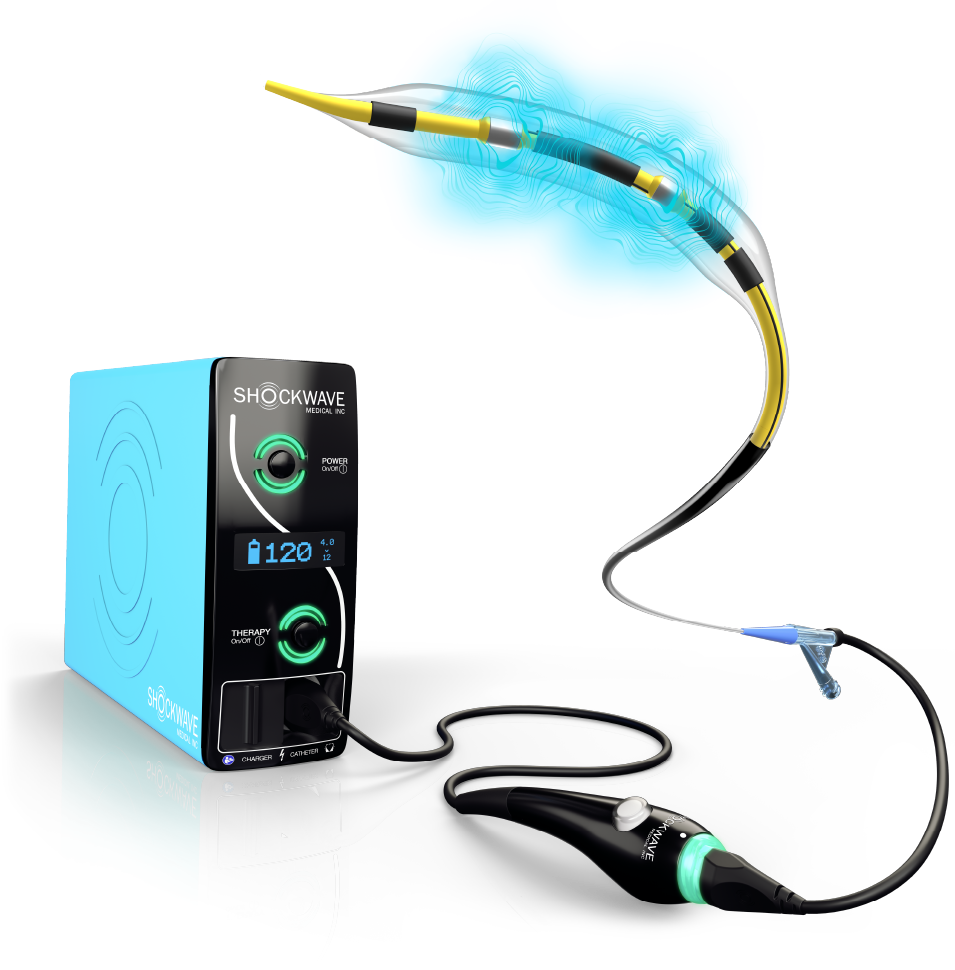
Delivers elevated efficiency
Shockwave C2 Aero Fly combines the impressive deliverability and crossability of Shockwave C2 Aero with increased efficiency you’ll appreciate clinically and operationally.
-
2X-faster pulsing
Improve procedural flow and support cath lab efficiency with upgraded pulsing speed. -
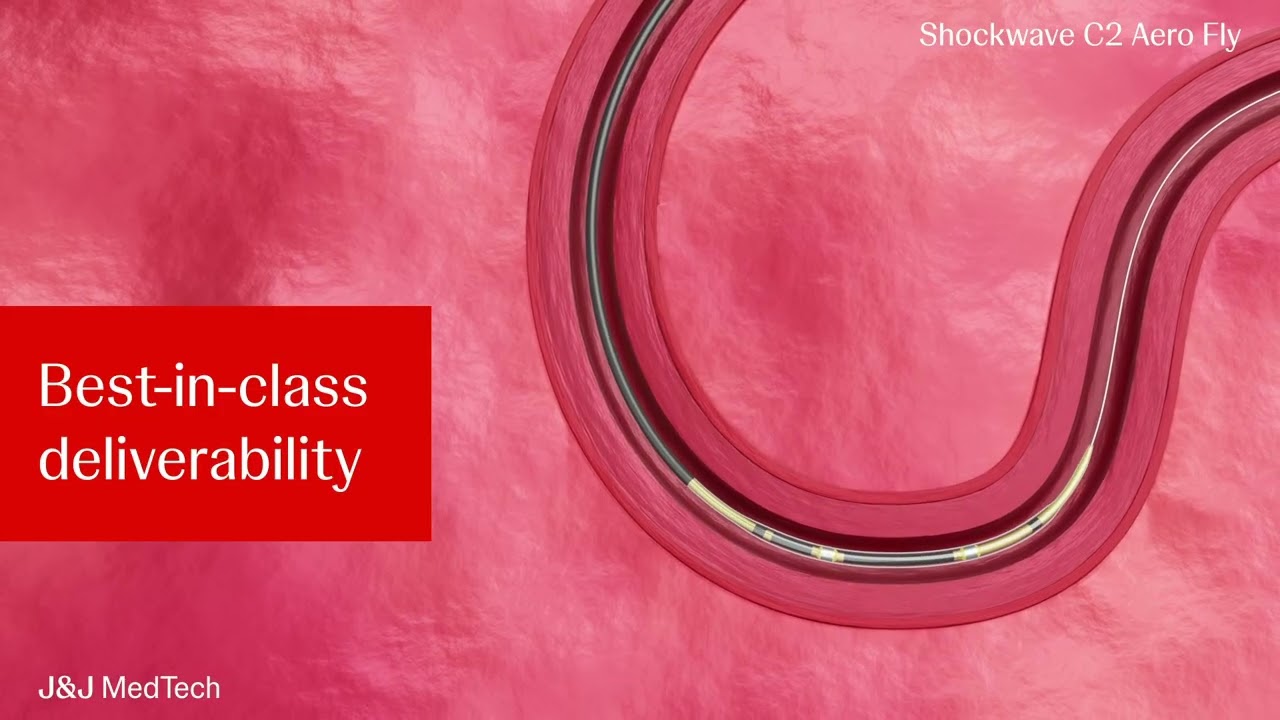
Best-in-class deliverability
Reach difficult anatomy using fewer exchanges with optimized profile and trackability.* -
Patient-focused innovation
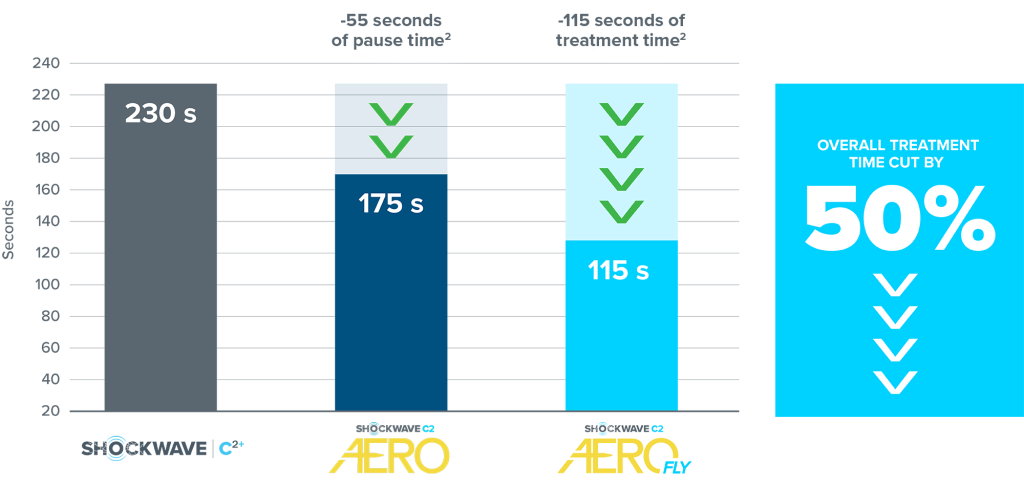
Minimize ischemic times1 with reduced periods of prolonged balloon inflation and shorter treatment duration.
*Based on simulated use bench testing. Based on feedback from physicians who participated in the Limited Market Release Survey
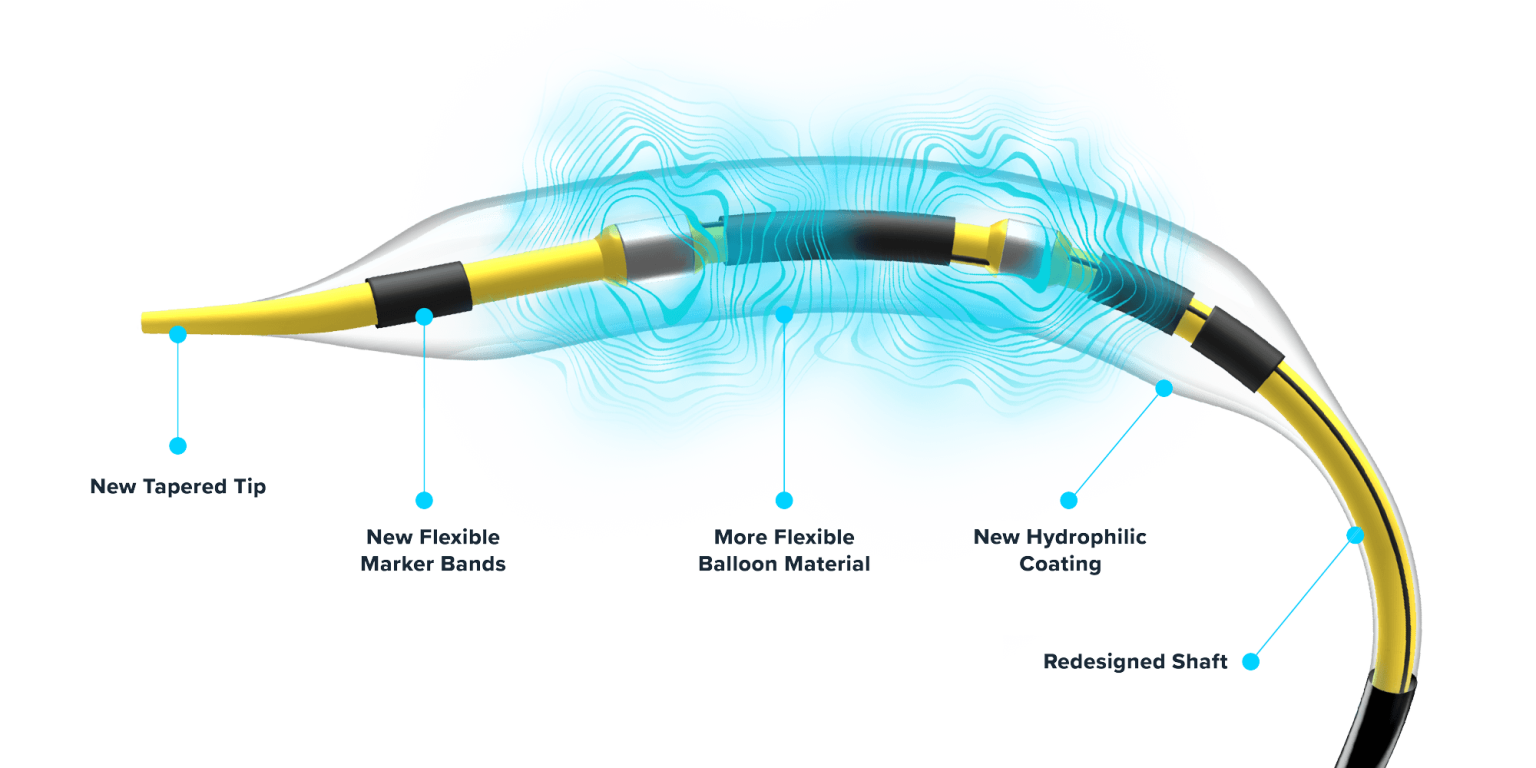
Taking Coronary Shockwave IVL further faster
You asked for quicker Coronary IVL — Shockwave C2 Aero Fly delivers. Reduced pause time between cycles paired with 2 Hz pulsing capabilities (two pulses per second) increases procedural efficiency and reduces overall ischemic time for the patient during the procedure.1
Shockwave C2 Aero Fly specifications
| Catalog number | Diameter | Length | Pulses | Guidewire | Guide cath | Length | Tip profile | Max crossing profile |
| C2AFIVL2512 | 2.5 mm | 12 mm | 120 | 0.014 in | 6 Fr | 138 cm | 0.022 in | 0.044 in |
| C2AFIVL3012 | 3.0 mm | 12 mm | 120 | 0.014 in | 6 Fr | 138 cm | 0.022 in | 0.045 in |
| C2AFIVL3512 | 3.5 mm | 12 mm | 120 | 0.014 in | 6 Fr | 138 cm | 0.022 in | 0.045 in |
| C2AFIVL4012 | 4.0 mm | 12 mm | 120 | 0.014 in | 6 Fr | 138 cm | 0.022 in | 0.047 in |
DISRUPT CAD DUO: demonstrated safety with elevated efficiency
Shockwave C2 Aero Fly’s 2Hz pulsing has the same safety profile as 1Hz rate in the coronaries.3,4
Accordion Section
The Disrupt CAD Duo IDE study is a prospective, multicenter, single-arm study designed to evaluate the safety and effectiveness of the novel 2-Hz IVL platform. The study enrolled 145 patients with single, de novo severely calcified lesions. Both primary study endpoints were evaluated for noninferiority compared with a propensity score–matched cohort from the Disrupt CAD III.
| Primary Endpoints | Disrupt CAD Duo (N=144) |
Disrupt CAD III (N=288) |
Difference [95% Lower CI] |
P-value (non-inferiority) |
| Safety: Freedom from 30-day MACE | 98.6% (142/144) | 96.2% (277/288) | 2.43% [-1.90%] | 0.00025 |
| Cardiac death | 0.0% (0/144) | 0.7% (2/288) | ||
| Periprocedural MI (SCAl definition) |
0.7% (1/144) | 2.8% (8/288) | ||
| Spontaneous MI beyond discharge (4th Universal) | 0.0% (0/144) | 1.4% (4/288) | ||
| TVR | 0.7% (1/144) | 1.7% (5/288) | ||
| Effectiveness: Procedural Success | 97.9% (140/143) | 96.5% (278/288) | 1.37% [-2.92%] | 0.00075 |
| Stent delivery | 98.6% (141/143) | 99.3% (286/288) | ||
| Residual stenosis ≤30% | 98.6% (141/143) | 99.0% (285/288) | ||
| Without in-hospital MACE | 99.3% (142/143) | 96.9% (279/288) |
The Disrupt CAD Duo study device was the Shockwave C2+ 2Hz Coronary IVL Catheter with Shockwave Intravascular Lithotripsy (IVL) System.
| Parameter | Post-IVL (N=115) |
Final (N=144) |
| Any serious angiographic complication6 | 0.9% (1/115) | 0.0% (0/144) |
| Major dissection (D-F)7 | 0.9% (1/115) | 0.0% (0/144) |
| Perforation (any)8 | 0.0% (0/115) | 0.0% (0/144) |
| Abrupt closure | 0.0% (0/115) | 0.0% (0/144) |
| Slow flow | 0.0% (0/115) | 0.0% (0/144) |
| No reflow | 0.0% (0/115) | 0.0% (0/144) |
| Parameter | Disrupt CAD DUO (N=144) |
Disrupt CAD III (N=290) |
| Capture during IVL therapy | 66.0% (95/144) | 43.7% (124/284)* |
| Single Beat | 22.1% (21/95) | 13.9% (24/122) |
| 2 or More Consecutive Beats | 77.9% (74/95) | 86.1% (105/122) |
| Clinically significant systolic BP reduction9 | 0.7% (1/144)10 | 0.1% (2/176)11 |
| Sustained ventricular arrhythmia (>30 seconds) | 0.0% (0/144) | 0.4% (1/285)12 |
*p<0.0001
Shockwave C2 Aero Fly resources
More Shockwave IVL devices
1: A shorter inflation time exposes the patient to less ischemic time compared to prior Shockwave devices.
2: Treatment time includes pulsing time and pause time. Pause time may vary by patient need.
3: Davies RE, Shlofmitz RA, Kim M, Schmidt TR, Roberts J, Oseni AO, et al. Safety and Effectiveness of a Novel 2-Hz Coronary Intravascular Lithotripsy System: The Disrupt CAD Duo IDE Study. JACC Cardiovasc Interv. 2026 Jul 27;19(14):1963–5. doi:10.1016/j.jcin.2026.02.018 PMID: 41804720.
4: Price M. Safety and Effectiveness of a Novel 2Hz Coronary Intravascular Lithotripsy System… CRT. Washington D.C., US; 2026.
5: Both primary endpoints were non-inferior to the propensity score-matched comparator cohort.
6: Serious angiographic complications include severe dissection (Type D to F), perforation, abrupt closure, persistent slow flow and no flow.
7: Dissections were categorized per the NHLBI classification system.
8: Perforations were categorized per the Ellis classification for coronary perforation.
9: Clinical significance determined by investigator.
10: Patient experienced BP drop prior to IVL.
11: Includes 2 patients with BP drop not during IVL portion of procedure.
12: Arrhythmia detected in patient without capture.