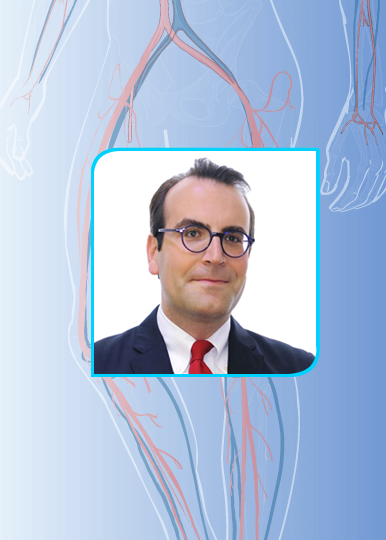
The Impact of DISRUPT CAD III Data on Clinical Practice Webinar by PCR featuring Drs. Emanuele Barbato (Italy), Benjamin Honton (France), & Michael Haude (Germany).


The physicians featured are paid consultants of Shockwave Medical.

Shockwave C2 and Shockwave C2+ Safety Information

In the United States: Rx only

Indications for Use— The Shockwave Intravascular Lithotripsy (IVL) System with the Shockwave C2 and C2+ Coronary IVL Catheter is indicated for lithotripsy-enabled, low-pressure balloon dilatation of severely calcified, stenotic de novo coronary arteries prior to stenting.

Contraindications— The Shockwave C2 and C2+ Coronary IVL System is contraindicated for the following: This device is not intended for stent delivery. This device is not intended for use in carotid or cerebrovascular arteries.

Warnings— Use the IVL Generator in accordance with recommended settings as stated in the Operator’s Manual. The risk of a dissection or perforation is increased in severely calcified lesions undergoing percutaneous treatment, including IVL. Appropriate provisional interventions should be readily available. Balloon loss of pressure was associated with a numerical increase in dissection which was not statistically significant and was not associated with MACE. Analysis indicates calcium length is a predictor of dissection and balloon loss of pressure. IVL generates mechanical pulses which may cause atrial or ventricular capture in bradycardic patients. In patients with implantable pacemakers and defibrillators, the asynchronous capture may interact with the sensing capabilities. Monitoring of the electrocardiographic rhythm and continuous arterial pressure during IVL treatment is required. In the event of clinically significant hemodynamic effects, temporarily cease delivery of IVL therapy.

Precautions— Only to be used by physicians trained in angiography and intravascular coronary procedures. Use only the recommended balloon inflation medium. Hydrophilic coating to be wet only with normal saline or water and care must be taken with sharp objects to avoid damage to the hydrophilic coating. Appropriate anticoagulant therapy should be administered by the physician. Precaution should be taken when treating patients with previous stenting within 5mm of target lesion.

Potential adverse effects consistent with standard based cardiac interventions include– Abrupt vessel closure – Allergic reaction to contrast medium, anticoagulant and/or antithrombotic therapy-Aneurysm-Arrhythmia-Arteriovenous fistula-Bleeding complications-Cardiac tamponade or pericardial effusion-Cardiopulmonary arrest-Cerebrovascular accident (CVA)-Coronary artery/vessel occlusion, perforation, rupture or dissection-Coronary artery spasm-Death-Emboli (air, tissue, thrombus or atherosclerotic emboli)-Emergency or nonemergency coronary artery bypass surgery-Emergency or nonemergency percutaneous coronary intervention-Entry site complications-Fracture of the guide wire or failure/malfunction of any component of the device that may or may not lead to device embolism, dissection, serious injury or surgical intervention-Hematoma at the vascular access site(s)- Hemorrhage-Hypertension/Hypotension-Infection/sepsis/fever-Myocardial Infarction-Myocardial Ischemia or unstable angina-Pain-Peripheral Ischemia-Pseudoaneurysm-Renal failure/insufficiency-Restenosis of the treated coronary artery leading to revascularization-Shock/pulmonary edema-Slow flow, no reflow, or abrupt closure of coronary artery-Stroke Thrombus-Vessel closure, abrupt-Vessel injury requiring surgical repair-Vessel dissection, perforation, rupture, or spasm.

Risks identified as related to the device and its use: Allergic/immunologic reaction to the catheter material(s) or coating-Device malfunction, failure, or balloon loss of pressure leading to device embolism, dissection, serious injury or surgical intervention-Atrial or ventricular extrasystole-Atrial or ventricular capture.

Prior to use, please reference the Instructions for Use for more information on indications, contraindications, warnings, precautions and adverse events. www.shockwavemedical.com/IFU.

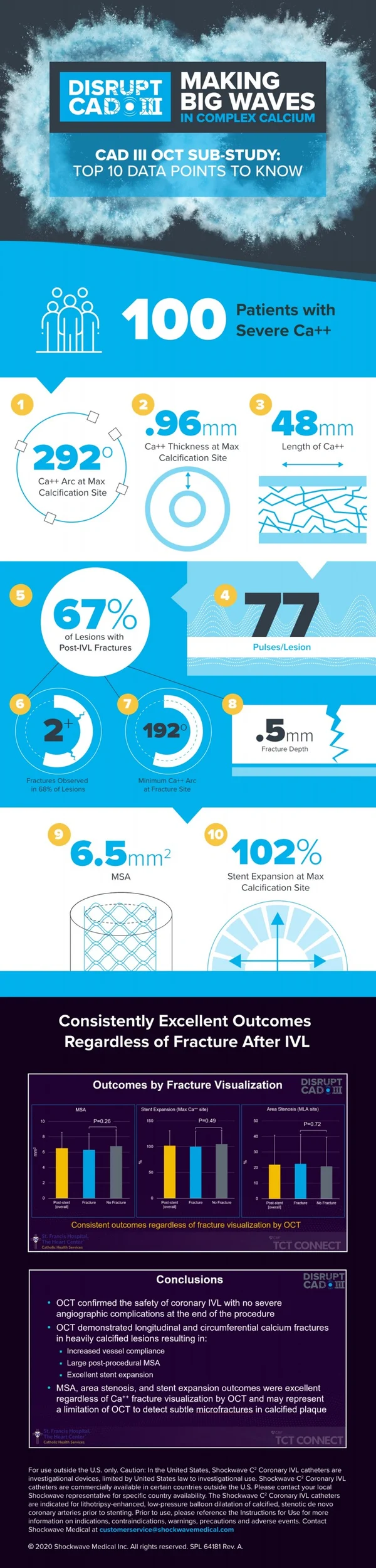
If an image is worth a thousand words, then we’d have to write a novel to capture all of the key takeaways from the 300 OCT images (i.e. pre-IVL, post-IVL & post-DES) that were taken from the 100 patients that participated in the DISRUPT CAD III OCT sub-analysis. Thankfully, we ditched the novel and opted for an easy-to-digest infographic to capture the 10 most pertinent data points from the OCT study presented at TCT Connect. Happy viewing!

View or download the Infographic PDF here

Infographic summarizing key findings from the Disrupt CAD III OCT sub-study


Coronary Important Safety Information:

In the United States: Rx only.

Indications for Use—The Shockwave Intravascular Lithotripsy (IVL) System with the Shockwave C2 Coronary IVL Catheter is indicated for lithotripsy-enabled, low-pressure balloon dilatation of severely calcified, stenotic de novo coronary arteries prior to stenting.

Contraindications—The Shockwave C2 Coronary IVL System is contraindicated for the following: This device is not intended for stent delivery. This device is not intended for use in carotid or cerebrovascular arteries.

Warnings— Use the IVL Generator in accordance with recommended settings as stated in the Operator’s Manual. The risk of a dissection or perforation is increased in severely calcified lesions undergoing percutaneous treatment, including IVL. Appropriate provisional interventions should be readily available. Balloon loss of pressure was associated with a numerical increase in dissection which was not statistically significant and was not associated with MACE.  Analysis indicates calcium length is a predictor of dissection and balloon loss of pressure.  IVL generates mechanical pulses which may cause atrial or ventricular capture in bradycardic patients. In patients with implantable pacemakers and defibrillators, the asynchronous capture may interact with the sensing capabilities. Monitoring of the electrocardiographic rhythm and continuous arterial pressure during IVL treatment is required.  In the event of clinically significant hemodynamic effects, temporarily cease delivery of IVL therapy.

Precautions— Only to be used by physicians trained in angiography and intravascular coronary procedures. Use only the recommended balloon inflation medium. Hydrophilic coating to be wet only with normal saline or water and care must be taken with sharp objects to avoid damage to the hydrophilic coating. Appropriate anticoagulant therapy should be administered by the physician. Precaution should be taken when treating patients with previous stenting within 5mm of target lesion.

Potential adverse effects consistent with standard based cardiac interventions include– Abrupt vessel closure – Allergic reaction to contrast medium, anticoagulant and/or antithrombotic therapy-Aneurysm-Arrhythmia-Arteriovenous fistula-Bleeding complications-Cardiac tamponade or pericardial effusion-Cardiopulmonary arrest-Cerebrovascular accident (CVA)-Coronary artery/vessel occlusion, perforation, rupture or dissection-Coronary artery spasm-Death-Emboli (air, tissue, thrombus or atherosclerotic emboli)-Emergency or non-emergency coronary artery bypass surgery-Emergency or non-emergency percutaneous coronary intervention-Entry site complications-Fracture of the guide wire or failure/malfunction of any component of the device that may or may not lead to device embolism, dissection, serious injury or surgical intervention-Hematoma at the vascular access site(s)-Hemorrhage-Hypertension/Hypotension-Infection/sepsis/fever-Myocardial Infarction-Myocardial Ischemia or unstable angina-Pain-Peripheral Ischemia-Pseudoaneurysm-Renal failure/insufficiency-Restenosis of the treated coronary artery leading to revascularization-Shock/pulmonary edema-Slow flow, no reflow, or abrupt closure of coronary artery-Stroke-Thrombus-Vessel closure, abrupt-Vessel injury requiring surgical repair-Vessel dissection, perforation, rupture, or spasm. Risks identified as related to the device and its use: Allergic/immunologic reaction to the catheter material(s) or coating-Device malfunction, failure, or balloon loss of pressure leading to device embolism, dissection, serious injury or surgical intervention-Atrial or ventricular extrasystole-Atrial or ventricular capture.

Prior to use, please reference the Instructions for Use for more information on warnings, precautions and adverse events.  https://shockwavemedical.com/IFU

Please contact your local Shockwave representative for specific country availability and refer to the Shockwave C2 instructions for use containing important safety information.

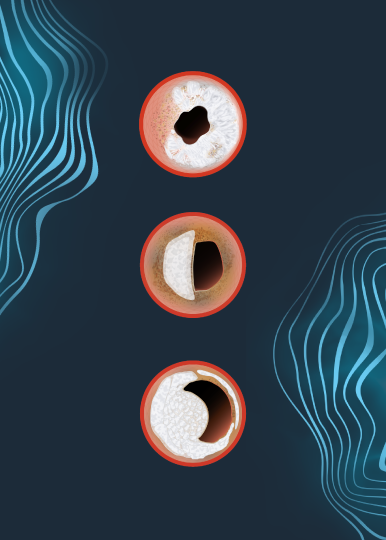
Eccentric calcium has always been a ‘pain’…a real thorn in the interventionalists’ side.  While current devices in eccentric calcium often expand the healthy, non-calcified side of the artery or fall subject to wire bias that prevents it from reaching the calcified side of the artery, coronary intravascular lithotripsy (IVL) offers a new alternative that can modify both concentric and eccentric calcium equally as well. Don’t be satisfied with less than ideal stent expansion in eccentric calcium, instead learn how Dr. Margaret McEntegart has used IVL to modify eccentric calcium in the left main and hear Profs. Holger Nef & Carlo Di Mario share their recent publications and clinical data comparing IVL outcomes in eccentric and concentric calcified lesions.

Assessment and Management of Calcified Coronary Lesions, Part 1/5

Live in a Box: Left Main Bifurcation Lesion with Eccentric Calcium, Part 2/5

DISRUPT CAD I/II Analysis: Eccentric Vs. Concentric Lesions, Part 3/5

Lithotripsy in Eccentric and Concentric Coronary Calcifications, Part 4/5

Discussion and Conclusion, Part 5/5


Coronary Important Safety Information:

In the United States: Rx only.

Indications for Use—The Shockwave Intravascular Lithotripsy (IVL) System with the Shockwave C2 Coronary IVL Catheter is indicated for lithotripsy-enabled, low-pressure balloon dilatation of severely calcified, stenotic de novo coronary arteries prior to stenting.

Contraindications—The Shockwave C2 Coronary IVL System is contraindicated for the following: This device is not intended for stent delivery. This device is not intended for use in carotid or cerebrovascular arteries.

Warnings— Use the IVL Generator in accordance with recommended settings as stated in the Operator’s Manual. The risk of a dissection or perforation is increased in severely calcified lesions undergoing percutaneous treatment, including IVL. Appropriate provisional interventions should be readily available. Balloon loss of pressure was associated with a numerical increase in dissection which was not statistically significant and was not associated with MACE.  Analysis indicates calcium length is a predictor of dissection and balloon loss of pressure.  IVL generates mechanical pulses which may cause atrial or ventricular capture in bradycardic patients. In patients with implantable pacemakers and defibrillators, the asynchronous capture may interact with the sensing capabilities. Monitoring of the electrocardiographic rhythm and continuous arterial pressure during IVL treatment is required.  In the event of clinically significant hemodynamic effects, temporarily cease delivery of IVL therapy.

Precautions— Only to be used by physicians trained in angiography and intravascular coronary procedures. Use only the recommended balloon inflation medium. Hydrophilic coating to be wet only with normal saline or water and care must be taken with sharp objects to avoid damage to the hydrophilic coating. Appropriate anticoagulant therapy should be administered by the physician. Precaution should be taken when treating patients with previous stenting within 5mm of target lesion.

Potential adverse effects consistent with standard based cardiac interventions include– Abrupt vessel closure – Allergic reaction to contrast medium, anticoagulant and/or antithrombotic therapy-Aneurysm-Arrhythmia-Arteriovenous fistula-Bleeding complications-Cardiac tamponade or pericardial effusion-Cardiopulmonary arrest-Cerebrovascular accident (CVA)-Coronary artery/vessel occlusion, perforation, rupture or dissection-Coronary artery spasm-Death-Emboli (air, tissue, thrombus or atherosclerotic emboli)-Emergency or non-emergency coronary artery bypass surgery-Emergency or non-emergency percutaneous coronary intervention-Entry site complications-Fracture of the guide wire or failure/malfunction of any component of the device that may or may not lead to device embolism, dissection, serious injury or surgical intervention-Hematoma at the vascular access site(s)-Hemorrhage-Hypertension/Hypotension-Infection/sepsis/fever-Myocardial Infarction-Myocardial Ischemia or unstable angina-Pain-Peripheral Ischemia-Pseudoaneurysm-Renal failure/insufficiency-Restenosis of the treated coronary artery leading to revascularization-Shock/pulmonary edema-Slow flow, no reflow, or abrupt closure of coronary artery-Stroke-Thrombus-Vessel closure, abrupt-Vessel injury requiring surgical repair-Vessel dissection, perforation, rupture, or spasm. Risks identified as related to the device and its use: Allergic/immunologic reaction to the catheter material(s) or coating-Device malfunction, failure, or balloon loss of pressure leading to device embolism, dissection, serious injury or surgical intervention-Atrial or ventricular extrasystole-Atrial or ventricular capture.

Prior to use, please reference the Instructions for Use for more information on warnings, precautions and adverse events.  https://shockwavemedical.com/IFU

Please contact your local Shockwave representative for specific country availability and refer to the Shockwave C2 instructions for use containing important safety information.
At TCT Connect, investigators presented the 30-day primary endpoint analysis of the DISRUPT CAD III study, the largest and most rigorous Shockwave coronary IVL study to date.

After the meeting, we invited the study’s co-PI, Dr. Jonathan Hill, and two additional DISRUPT CAD III investigators, Drs. Margaret McEntegart and Holger Nef, to review the results and discuss the trial takeaways with two thought leaders in calcium modification not involved in the study, Profs. Carlo Di Mario and Flavio Ribichini, to hear their take as independent physicians.

The conversation spanned many great topics, including whether imaging is necessary or a nice-to-have with Shockwave IVL, the learning curve associated with the technology, the clinical impact of IVL-induced ventricular capture, and what the compelling DISRUPT CAD III data add to the existing coronary IVL body of evidence. We hope you enjoy the discussion!


Dr. Jonathan Hill, Dr. Margaret McEntegart, and Dr. Holger Nef are paid consultants for Shockwave Medical.

Coronary Important Safety Information:

In the United States: Rx only.

Indications for Use—The Shockwave Intravascular Lithotripsy (IVL) System with the Shockwave C2 Coronary IVL Catheter is indicated for lithotripsy-enabled, low-pressure balloon dilatation of severely calcified, stenotic de novo coronary arteries prior to stenting.

Contraindications—The Shockwave C2 Coronary IVL System is contraindicated for the following: This device is not intended for stent delivery. This device is not intended for use in carotid or cerebrovascular arteries.

Warnings— Use the IVL Generator in accordance with recommended settings as stated in the Operator’s Manual. The risk of a dissection or perforation is increased in severely calcified lesions undergoing percutaneous treatment, including IVL. Appropriate provisional interventions should be readily available. Balloon loss of pressure was associated with a numerical increase in dissection which was not statistically significant and was not associated with MACE.  Analysis indicates calcium length is a predictor of dissection and balloon loss of pressure.  IVL generates mechanical pulses which may cause atrial or ventricular capture in bradycardic patients. In patients with implantable pacemakers and defibrillators, the asynchronous capture may interact with the sensing capabilities. Monitoring of the electrocardiographic rhythm and continuous arterial pressure during IVL treatment is required.  In the event of clinically significant hemodynamic effects, temporarily cease delivery of IVL therapy.

Precautions— Only to be used by physicians trained in angiography and intravascular coronary procedures. Use only the recommended balloon inflation medium. Hydrophilic coating to be wet only with normal saline or water and care must be taken with sharp objects to avoid damage to the hydrophilic coating. Appropriate anticoagulant therapy should be administered by the physician. Precaution should be taken when treating patients with previous stenting within 5mm of target lesion.

Potential adverse effects consistent with standard based cardiac interventions include– Abrupt vessel closure – Allergic reaction to contrast medium, anticoagulant and/or antithrombotic therapy-Aneurysm-Arrhythmia-Arteriovenous fistula-Bleeding complications-Cardiac tamponade or pericardial effusion-Cardiopulmonary arrest-Cerebrovascular accident (CVA)-Coronary artery/vessel occlusion, perforation, rupture or dissection-Coronary artery spasm-Death-Emboli (air, tissue, thrombus or atherosclerotic emboli)-Emergency or non-emergency coronary artery bypass surgery-Emergency or non-emergency percutaneous coronary intervention-Entry site complications-Fracture of the guide wire or failure/malfunction of any component of the device that may or may not lead to device embolism, dissection, serious injury or surgical intervention-Hematoma at the vascular access site(s)-Hemorrhage-Hypertension/Hypotension-Infection/sepsis/fever-Myocardial Infarction-Myocardial Ischemia or unstable angina-Pain-Peripheral Ischemia-Pseudoaneurysm-Renal failure/insufficiency-Restenosis of the treated coronary artery leading to revascularization-Shock/pulmonary edema-Slow flow, no reflow, or abrupt closure of coronary artery-Stroke-Thrombus-Vessel closure, abrupt-Vessel injury requiring surgical repair-Vessel dissection, perforation, rupture, or spasm. Risks identified as related to the device and its use: Allergic/immunologic reaction to the catheter material(s) or coating-Device malfunction, failure, or balloon loss of pressure leading to device embolism, dissection, serious injury or surgical intervention-Atrial or ventricular extrasystole-Atrial or ventricular capture.

Prior to use, please reference the Instructions for Use for more information on warnings, precautions and adverse events.  https://shockwavemedical.com/IFU

Please contact your local Shockwave representative for specific country availability and refer to the Shockwave C2 instructions for use containing important safety information.
Dr. Sandeep Basavarajaiah, consultant cardiologist at Heartlands Hospital in Birmingham, UK, and other leading UK and Italian cardiologists published their initial real-world experience with Intravascular Lithotripsy (IVL) in a real-world population, in Catheter Cardiovasc Interv: “Intravascular lithotripsy in calcified-coronary lesions: A real-world observational, European multicenter study”.

We had the privilege of connecting with Dr. Sandeep Basavarajaiah and with Dr. Alfonso Ielasi, from Milan, Italy, to learn more about the publication and its key takeaways.

Read the publication and enjoy their Q&A:

What does this study add to interventionalists’ daily practice?

Dr. Basavarajaiah: This study provides the safety data on IVL use in real-world population from six-high volume centres that undertake complex coronary intervention. In addition, it also demonstrates the high success rate in completing the procedure with very low event rates during this short-term follow-up.


How will you describe the baseline demographics of patients included in this study and how does it compare with DISRUPT CAD trials already published?

Dr. Ielasi: From a clinical point of view our study reflects a different nature compared to the DISRUPT CAD studies. Typical clinical predictors of events, such diabetes and CKD, were more represented in our “all-comers” registry as well as the more aggressive interventional approaches, e.g. “rotatripsy”. The lack of a systematic use of intracoronary imaging in our study reflects a real-world practice according to country and regional reimbursement. However, this aspect did not influence the clinical outcome.


From your perspective what are the key takeaways from this publication?

Dr. Basavarajaiah: Our study from a real-world practice has shown that the use of IVL in complex calcified coronary lesions appears safe with low rates of complications and high rates of procedural success. In addition, the clinical outcomes are promising with low even rates. This should encourage operators to embrace this novel technology in their daily clinical practice.


Intravascular imaging was only used in ~1/4 of the cases. What drives the need of use intravascular imaging in this group of patients? Do you think that using intracoronary imaging is mandatory in a real-world setting in order to attain good results with IVL?

Dr. Ielasi: In our study, the use of intravascular imaging was left to operator’s discretion and it was mostly performed in the initial IVL experience (led by the curiosity to assess the IVL effect on calcified lesions) and in case of intra-stent lesions (off label use). Although intravascular imaging is of paramount importance to appreciate the type and extension of the calcifications in the vessel wall, in our experience not using intracoronary imaging to guide PCI did not result in poorer clinical outcomes.


When intravascular imaging isn’t available how do you decide to use IVL based on angio alone?

Dr. Basavarajaiah: Degree of calcium can be analysed on the angiogram, although not as accurately as from intra-vascular imaging. If intra-vascular imaging is not available, we would suggest considering IVL only if conventional devices failed to expand the lesion (bailout use of IVL).


In this paper you present a very simplified algorithm. With the current algorithms previously developed, what compelled you to develop this straightforward and imaging-free algorithm?

Dr. Ielasi: This algorithm provides a simple and practical decision making approach, to treat resistant coronary lesions without the need of intracoronary imaging, while providing some suggestion on when IVL usage should be considered.


Dr. Sandeep Basavarajaiah and Dr. Alfonso Ielasi are paid consultants of Shockwave Medical.

Coronary Important Safety Information:

In the United States: Rx only.

Indications for Use—The Shockwave Intravascular Lithotripsy (IVL) System with the Shockwave C2 Coronary IVL Catheter is indicated for lithotripsy-enabled, low-pressure balloon dilatation of severely calcified, stenotic de novo coronary arteries prior to stenting.

Contraindications—The Shockwave C2 Coronary IVL System is contraindicated for the following: This device is not intended for stent delivery. This device is not intended for use in carotid or cerebrovascular arteries.

Warnings— Use the IVL Generator in accordance with recommended settings as stated in the Operator’s Manual. The risk of a dissection or perforation is increased in severely calcified lesions undergoing percutaneous treatment, including IVL. Appropriate provisional interventions should be readily available. Balloon loss of pressure was associated with a numerical increase in dissection which was not statistically significant and was not associated with MACE.  Analysis indicates calcium length is a predictor of dissection and balloon loss of pressure.  IVL generates mechanical pulses which may cause atrial or ventricular capture in bradycardic patients. In patients with implantable pacemakers and defibrillators, the asynchronous capture may interact with the sensing capabilities. Monitoring of the electrocardiographic rhythm and continuous arterial pressure during IVL treatment is required.  In the event of clinically significant hemodynamic effects, temporarily cease delivery of IVL therapy.

Precautions— Only to be used by physicians trained in angiography and intravascular coronary procedures. Use only the recommended balloon inflation medium. Hydrophilic coating to be wet only with normal saline or water and care must be taken with sharp objects to avoid damage to the hydrophilic coating. Appropriate anticoagulant therapy should be administered by the physician. Precaution should be taken when treating patients with previous stenting within 5mm of target lesion.

Potential adverse effects consistent with standard based cardiac interventions include– Abrupt vessel closure – Allergic reaction to contrast medium, anticoagulant and/or antithrombotic therapy-Aneurysm-Arrhythmia-Arteriovenous fistula-Bleeding complications-Cardiac tamponade or pericardial effusion-Cardiopulmonary arrest-Cerebrovascular accident (CVA)-Coronary artery/vessel occlusion, perforation, rupture or dissection-Coronary artery spasm-Death-Emboli (air, tissue, thrombus or atherosclerotic emboli)-Emergency or non-emergency coronary artery bypass surgery-Emergency or non-emergency percutaneous coronary intervention-Entry site complications-Fracture of the guide wire or failure/malfunction of any component of the device that may or may not lead to device embolism, dissection, serious injury or surgical intervention-Hematoma at the vascular access site(s)-Hemorrhage-Hypertension/Hypotension-Infection/sepsis/fever-Myocardial Infarction-Myocardial Ischemia or unstable angina-Pain-Peripheral Ischemia-Pseudoaneurysm-Renal failure/insufficiency-Restenosis of the treated coronary artery leading to revascularization-Shock/pulmonary edema-Slow flow, no reflow, or abrupt closure of coronary artery-Stroke-Thrombus-Vessel closure, abrupt-Vessel injury requiring surgical repair-Vessel dissection, perforation, rupture, or spasm. Risks identified as related to the device and its use: Allergic/immunologic reaction to the catheter material(s) or coating-Device malfunction, failure, or balloon loss of pressure leading to device embolism, dissection, serious injury or surgical intervention-Atrial or ventricular extrasystole-Atrial or ventricular capture.

Prior to use, please reference the Instructions for Use for more information on warnings, precautions and adverse events.  https://shockwavemedical.com/IFU

Please contact your local Shockwave representative for specific country availability and refer to the Shockwave C2 instructions for use containing important safety information.
Perspective on IVL-Induced Ventricular Capture from Keith D. Dawkins, M.D., Chief Medical Officer, Shockwave Medical, Inc.:

Late last week, one of our customers in the UK reported in the European Heart Journal what appears to be the first reported case of ventricular fibrillation (VF) associated with IVL. We appreciate that this case report was published in order for physicians to be informed of this rare event.

VF associated with IVL use is rare based on our clinical and commercial experience: this is the first report we are aware of in over 25K coronary IVL cases performed to date.

The report describes in detail how, in an off-label case, a severely calcified in-stent restenosis of the right coronary artery (RCA), IVL spikes fell on a T-wave, which then in-turn seems to have induced VF.

For background, IVL produces a low amount of mechanical energy, which is capable of inducing premature ventricular beats in primarily bradycardic patients, known as ‘IVL-induced ventricular capture,’ which was described well in the EuroIntervention publication from Wilson et al who documented its first report. It is important to understand that no electrical current leaves the IVL catheter. Rather, a small amount of mechanical energy is transferred to the vessel wall when sonic pressure waves are created that have been shown to create a stretch activated response in the myocardium.

Last month, the DISRUPT CAD III clinical trial investigators published in JACC the first prospective analysis on this topic as part of the 431-patient U.S. IDE study, which showed IVL-induced capture was common but benign, with the authors noting, “Decreased systolic blood pressure during the IVL procedure was more frequent in patients with IVL-induced capture compared to those without (40.5% vs. 24.5%; p = 0.0007). However, the magnitude of the drop in systolic blood pressure was similar between the 2 groups (18.9 vs. 23.5 mmHg systolic; p = 0.07). IVL-induced capture did not result in sustained ventricular arrhythmias during or immediately after the IVL procedure in any patient and was not associated with adverse events.”

While acknowledging that VF can occur in any case, diagnostic or interventional, a recently published report showed that the risk of VT or VF is 0.8% in diagnostic angiography, 1.1% for stable PCI and as much as 4.3% for primary PCI in AMI. In these cases, VF may also be caused by ischemic events, for example prolonged balloon inflations, not related to IVL.

VF is typically reversible with cardioversion in the cath lab, as was the case in this published report.

We understand IVL-induced ventricular capture, and while we have not heard of any other VF reports, we will continue to monitor this topic and encourage our customers to continue to report complaints to our quality team at [email protected].


Important Safety Information – Coronary IVL

Caution: In the United States, Shockwave C2 Coronary IVL catheters are investigational devices, limited by United States law to investigational use. DISRUPT CAD III Study

Shockwave C2 Coronary IVL catheters are commercially available in certain countries outside the U.S. Please contact your local Shockwave representative for specific country availability. The Shockwave C2 Coronary IVL catheters are indicated for lithotripsy-enhanced, low-pressure balloon dilatation of calcified, stenotic de novo coronary arteries prior to stenting. For the full IFU containing important safety information please visit: https://shockwavemedical.com/clinicians/international/coronary/shockwave-c2/

Following its presentation as a late-breaking clinical at TCT Connect and simultaneous publication in the Journal of the American College of Cardiology (JACC) we sat down with Dr. Jonathan Hill, Consultant Cardiologist at the Royal Brompton Hospital in London, to get his perspective on the results, how they build on DISRUPT CAD I and II outcomes, and where they fit into clinician’s daily decision-making process when treating calcified lesions. We hope you enjoy his perspective.


What does DISRUPT CAD III add to the existing results from DISRUPT CAD I and DISRUPT CAD II?

Dr. Hill: CAD III is the culmination of four years of research in over 600 patients that has spanned three studies. Its results are noteworthy in that it’s the first study that has been appropriately powered to evaluate the safety and effectiveness of IVL, which is important when evaluating low frequency angiographic complications, such as perforations and dissections, as well as clinical events, such as MI and TVR. It also is the first IVL study to prospectively look at IVL’s impact on heart rhythm, and follow patients for two years. Finally, we studied more patients with OCT than CAD I and II combined. For all of these reasons, its results have unveiled a significant amount of new insights about the therapy.


How would you summarize the key findings from DISRUPT CAD III?

Dr. Hill: There are four key findings from my perspective. First, CAD III successfully met both its primary safety and effectiveness endpoints, despite having one of the most challenging cohort of calcified lesions ever studied. Second, coronary IVL prior to DES implantation was well tolerated with a low rate of major peri-procedural clinical and angiographic complications, similar to what we found in CAD I and II. Third, IVL-induced ventricular capture was common, but was transient and benign with no clinical sequelae in any patient. And lastly, although this study represents the initial coronary IVL experience for U.S. operators, similar high procedural success and device crossing success, as well as low MACE and angiographic complications were achieved in both the initial roll-in cases and the patients included in the ITT analysis, demonstrating the relative ease of use of IVL for the first time in a study.


Why do you say that this was one of the most challenging cohorts of calcified lesions ever studied?

Dr. Hill: Following the ORBIT II design as our predicate study, the inclusion criteria for CAD III was designed to focus on finding the most severely calcified patients, only including patients with angiographic evidence of calcium on both sides of the artery, or more than 270 degrees of calcium under intravascular imaging. We were successful to that end, enrolling 100% of patients with severe calcium. The average calcium lesion length was very long at 47.9 mm, and the average calcium arc was 292.5 degrees with a thickness of 0.96 mm at the site of maximum calcification as measured by OCT. If you’re familiar with the rule of 5s with OCT, you’ll know that these are the most challenging type of calcified lesions to treat: thick, circumferential and diffuse calcium.


Were there any surprises or unexpected findings from DISRUPT CAD III?

Dr. Hill: One of the current limitations of the technology has been its higher crossing profile when compared to a normal NC balloon. However, despite the marked severity of the calcified lesions treated, IVL was able to cross and deliver therapy in 98.2% of lesions, or 377 of 384 total patients, which then lead to a 99% rate of stent deliverability. I was surprised to see such a high crossing rate, especially considering that this was U.S. operators first use of the technology.

Another unexpected finding was related to fracture evidence under OCT. Interestingly, OCT showed excellent stent expansion in those lesions with and without calcium fractures identified by OCT despite the marked severity of the calcified lesions treated, meaning that IVL led to improved vessel compliance and favorable stent expansion even without demonstrable calcium fracture by OCT. I think that finding will surprise my fellow colleagues who use OCT regularly and have trained themselves to look for fractures to know if they have delivered enough energy to adequately prepare the artery for stent implantation. This raises the prospect of IVL induced microfractures not visible by OCT as an additional mechanism of increasing vessel compliance.


You mentioned IVL-induced ventricular capture was investigated prospectively in DISRUPT CAD III for the first time – what were the conclusions regarding this topic?

Dr. Hill: As many have seen in their own use with the technology, as well as what has been reported previously about IVL-induced ventricular capture in the EuroIntervention publication, CAD III found that this phenomenon was common, occurring in just over 40% of cases. Importantly, no serious adverse clinical events occurred as a result of IVL-induced capture. It was significantly more common if the pre-procedure heart rate was lower, particularly by multivariate analysis less than 60BPM. The drop in systolic blood pressure was more frequent, but not more severe, based on this analysis. And most important this was a transient phenomenon which resolved once IVL delivery stopped without significant sequalae.


What are your main takeaways from the OCT sub-study?

Dr. Hill: I think my main takeaways from the OCT sub-study would be that with 100 OCT patients studied, we have the largest analysis yet that provides us with new evidence that confirms and extends prior findings on IVL’s unique mechanism of action that enables optimal stent delivery, expansion and apposition. A few of the stats that I thought were interesting were the final MSA of 6.5 mm, which is a great outcome, the final stent expansion of 102% at the site of maximum calcification (where the calcium angle was 292° and 0.96 mm thick on average), and that post-IVL calcium fractures were observed in multiple longitudinal planes in 67% of lesions.

Looking specifically at the fractures, four correlative findings were that the minimum calcium angle that resulted in calcium fracture was 192° and the result already mentioned that regardless of calcium fracture identification by OCT, there were no differences between lesions with or without fractures in relation to the MSA, final area stenosis, and stent expansion. The fractures were also an average depth of 0.5 mm deep and 0.5 mm wide, which expanded to 1.3 mm after stent implantation.


How does DISRUPT CAD III change your use of IVL or your daily practice of calcium management?

Dr. Hill: I think there are several practice-changing finds for operators across Europe who have been using the technology for some time now. First, we know what to expect now with IVL-induced capture, including how often it occurs, in which scenarios and what impact it has on the patients so that we can mitigate it successfully. Two, when looking for post-IVL fractures for those who use OCT, the CAD III data would suggest that evidence of fracture is not a necessary indicator of adequate lesion preparation with IVL.

For those individuals who do not use intravascular imaging in everyday practice, this data shows that overall balloon expansion under angiography may be an alternative way to determine if the calcium has been modified adequately and that the vessel compliance has changed sufficiently for DES implantation.


Where do we go from here in regard to clinical evidence with IVL?

Dr. Hill: The study of IVL across CAD I, CAD II and CAD III provides a robust clinical data set of over 600 patients, and from the CAD III study, we have identified additional areas of interest beyond what was observed in the initial studies. First, I think it’s important to note that the JACC publication is the 30-day data, and these patients will be followed out to two years, which will be important as this will be the longest and most rigorous follow-up conducted on coronary IVL patients to date. Second, the fact that MSA, area stenosis, and stent expansion outcomes were excellent regardless of calcium fracture visualization by OCT is a novel finding and challenges the accepted practice of visual confirmation when using calcium modification tools. It may represent OCT’s limitation to detect subtle micro-fractures or out-of-plane fractures in calcified plaque, but this is just a hypothesis and we need to further assess. Third, while this patient population consisted of mostly lesions with circumferential calcium, further assessment of the OCT patients treated within the DISRUPT CAD program, which should be nearly 250 patients, will provide more insights regarding the similar performance in concentric & eccentric lesions that was previously found in the CAD II angiography-based study. And finally, addressing the major limitations of nearly all calcium modifications algorithms that are coming to light (with none based on data), randomized data across multiple calcium tools may be warranted. I have no doubt that RCTs will be done that include IVL and other calcium tools; in fact there are several smaller RCT – some investigator-sponsored and others independent – that have been initiated, and I look forward to their outcomes.


Dr. Jonathan Hill is a paid consultant of Shockwave Medical.

Coronary Important Safety Information:

In the United States: Rx only.

Indications for Use—The Shockwave Intravascular Lithotripsy (IVL) System with the Shockwave C2 Coronary IVL Catheter is indicated for lithotripsy-enabled, low-pressure balloon dilatation of severely calcified, stenotic de novo coronary arteries prior to stenting.

Contraindications—The Shockwave C2 Coronary IVL System is contraindicated for the following: This device is not intended for stent delivery. This device is not intended for use in carotid or cerebrovascular arteries.

Warnings— Use the IVL Generator in accordance with recommended settings as stated in the Operator’s Manual. The risk of a dissection or perforation is increased in severely calcified lesions undergoing percutaneous treatment, including IVL. Appropriate provisional interventions should be readily available. Balloon loss of pressure was associated with a numerical increase in dissection which was not statistically significant and was not associated with MACE.  Analysis indicates calcium length is a predictor of dissection and balloon loss of pressure.  IVL generates mechanical pulses which may cause atrial or ventricular capture in bradycardic patients. In patients with implantable pacemakers and defibrillators, the asynchronous capture may interact with the sensing capabilities. Monitoring of the electrocardiographic rhythm and continuous arterial pressure during IVL treatment is required.  In the event of clinically significant hemodynamic effects, temporarily cease delivery of IVL therapy.

Precautions— Only to be used by physicians trained in angiography and intravascular coronary procedures. Use only the recommended balloon inflation medium. Hydrophilic coating to be wet only with normal saline or water and care must be taken with sharp objects to avoid damage to the hydrophilic coating. Appropriate anticoagulant therapy should be administered by the physician. Precaution should be taken when treating patients with previous stenting within 5mm of target lesion.

Potential adverse effects consistent with standard based cardiac interventions include– Abrupt vessel closure – Allergic reaction to contrast medium, anticoagulant and/or antithrombotic therapy-Aneurysm-Arrhythmia-Arteriovenous fistula-Bleeding complications-Cardiac tamponade or pericardial effusion-Cardiopulmonary arrest-Cerebrovascular accident (CVA)-Coronary artery/vessel occlusion, perforation, rupture or dissection-Coronary artery spasm-Death-Emboli (air, tissue, thrombus or atherosclerotic emboli)-Emergency or non-emergency coronary artery bypass surgery-Emergency or non-emergency percutaneous coronary intervention-Entry site complications-Fracture of the guide wire or failure/malfunction of any component of the device that may or may not lead to device embolism, dissection, serious injury or surgical intervention-Hematoma at the vascular access site(s)-Hemorrhage-Hypertension/Hypotension-Infection/sepsis/fever-Myocardial Infarction-Myocardial Ischemia or unstable angina-Pain-Peripheral Ischemia-Pseudoaneurysm-Renal failure/insufficiency-Restenosis of the treated coronary artery leading to revascularization-Shock/pulmonary edema-Slow flow, no reflow, or abrupt closure of coronary artery-Stroke-Thrombus-Vessel closure, abrupt-Vessel injury requiring surgical repair-Vessel dissection, perforation, rupture, or spasm. Risks identified as related to the device and its use: Allergic/immunologic reaction to the catheter material(s) or coating-Device malfunction, failure, or balloon loss of pressure leading to device embolism, dissection, serious injury or surgical intervention-Atrial or ventricular extrasystole-Atrial or ventricular capture.

Prior to use, please reference the Instructions for Use for more information on warnings, precautions and adverse events.  https://shockwavemedical.com/IFU

Please contact your local Shockwave representative for specific country availability and refer to the Shockwave C2 instructions for use containing important safety information.
No one likes to be stuck between a rock and hard place…well, in interventional cardiology, no one likes to treat a rock in a hard place either! Calcified bifurcations are one of the most complex clinical scenarios faced today on a routine basis. For that reason, we’ve paired up a few international “rockstar” physicians to give you the 101 on calcified bifurcations whether you’re 1,1,1 1,0,1 or 0,1,0…

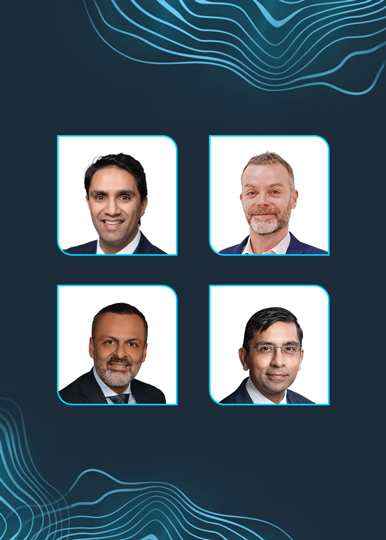
Speaker panel image featuring four individuals, each in a circular frame with a blue outline. Names listed below their respective portraits are Goran Stankovic, Tom Johnson, Holger Nef, and Francesco Burzotta

Drs. Goran Stankovic (Belgrade, Serbia), Tom Johnson (Bristol, United Kingdom), Holger Nef (Giessen, Germany) and Francesco Burzotta (Rome, Italy) share their techniques and tools to optimize outcomes in challenging calcified bifurcation lesions in this educational symposium hosted by Rutherford Medicine.


Dr. Goran Stankovic, Dr. Tom Johnson, Dr. Holger Nef and Dr. Francesco Burzotta are paid consultants of Shockwave Medical.

Coronary Important Safety Information:

In the United States: Rx only.

Indications for Use—The Shockwave Intravascular Lithotripsy (IVL) System with the Shockwave C2 Coronary IVL Catheter is indicated for lithotripsy-enabled, low-pressure balloon dilatation of severely calcified, stenotic de novo coronary arteries prior to stenting.

Contraindications—The Shockwave C2 Coronary IVL System is contraindicated for the following: This device is not intended for stent delivery. This device is not intended for use in carotid or cerebrovascular arteries.

Warnings— Use the IVL Generator in accordance with recommended settings as stated in the Operator’s Manual. The risk of a dissection or perforation is increased in severely calcified lesions undergoing percutaneous treatment, including IVL. Appropriate provisional interventions should be readily available. Balloon loss of pressure was associated with a numerical increase in dissection which was not statistically significant and was not associated with MACE.  Analysis indicates calcium length is a predictor of dissection and balloon loss of pressure.  IVL generates mechanical pulses which may cause atrial or ventricular capture in bradycardic patients. In patients with implantable pacemakers and defibrillators, the asynchronous capture may interact with the sensing capabilities. Monitoring of the electrocardiographic rhythm and continuous arterial pressure during IVL treatment is required.  In the event of clinically significant hemodynamic effects, temporarily cease delivery of IVL therapy.

Precautions— Only to be used by physicians trained in angiography and intravascular coronary procedures. Use only the recommended balloon inflation medium. Hydrophilic coating to be wet only with normal saline or water and care must be taken with sharp objects to avoid damage to the hydrophilic coating. Appropriate anticoagulant therapy should be administered by the physician. Precaution should be taken when treating patients with previous stenting within 5mm of target lesion.

Potential adverse effects consistent with standard based cardiac interventions include– Abrupt vessel closure – Allergic reaction to contrast medium, anticoagulant and/or antithrombotic therapy-Aneurysm-Arrhythmia-Arteriovenous fistula-Bleeding complications-Cardiac tamponade or pericardial effusion-Cardiopulmonary arrest-Cerebrovascular accident (CVA)-Coronary artery/vessel occlusion, perforation, rupture or dissection-Coronary artery spasm-Death-Emboli (air, tissue, thrombus or atherosclerotic emboli)-Emergency or non-emergency coronary artery bypass surgery-Emergency or non-emergency percutaneous coronary intervention-Entry site complications-Fracture of the guide wire or failure/malfunction of any component of the device that may or may not lead to device embolism, dissection, serious injury or surgical intervention-Hematoma at the vascular access site(s)-Hemorrhage-Hypertension/Hypotension-Infection/sepsis/fever-Myocardial Infarction-Myocardial Ischemia or unstable angina-Pain-Peripheral Ischemia-Pseudoaneurysm-Renal failure/insufficiency-Restenosis of the treated coronary artery leading to revascularization-Shock/pulmonary edema-Slow flow, no reflow, or abrupt closure of coronary artery-Stroke-Thrombus-Vessel closure, abrupt-Vessel injury requiring surgical repair-Vessel dissection, perforation, rupture, or spasm. Risks identified as related to the device and its use: Allergic/immunologic reaction to the catheter material(s) or coating-Device malfunction, failure, or balloon loss of pressure leading to device embolism, dissection, serious injury or surgical intervention-Atrial or ventricular extrasystole-Atrial or ventricular capture.

Prior to use, please reference the Instructions for Use for more information on warnings, precautions and adverse events.  https://shockwavemedical.com/IFU

Please contact your local Shockwave representative for specific country availability and refer to the Shockwave C2 instructions for use containing important safety information.
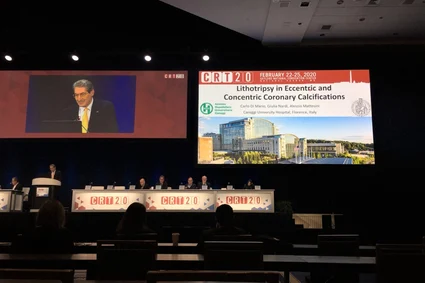
Prof. Carlo Di Mario, Director of Structural Interventional Cardiology at the Careggi University Hospital in Florence, Italy, and other cardiologists in Florence recently published their initial real-world experience when using intravascular imaging while treating coronary lesions with intravascular lithotripsy (IVL).

The publication in Cardiovascular Revascularization Medicine, entitled “Intravascular imaging to guide lithotripsy in concentric and eccentric calcific coronary lesions,” showed similar positive outcomes in more complex real-world patients who failed other calcium modification strategies before turning to imaging-guided IVL, compared to the patients treated with de novo lesions in DISRUPT CAD I & II. What’s more, his analysis also looked at the arc of calcium to see if there were any differences in outcomes. His results, in his own words, were “unexpected.”

We had the privilege of connecting with Prof. Di Mario to learn more about the publication, its key takeaways and some of his practical recommendations as one of the earliest users of Shockwave IVL in the coronaries.

Read the publication and enjoy his Q&A:


Question:  What are the current challenges in treating calcified eccentric lesions and solely using angiography to guide IVL delivery?

Prof. Di Mario:  The main issue is that we have no certainty, only based on angiography, of the true extension of the calcium arc. Thinner superficial calcium sheets can be less visible than the contralateral thicker layers giving the false impression of an eccentric calcification and vice versa parallel rails of calcium can be present in one view even below the 180 degree arc. This is the main limitation of the manuscript that Nef and colleagues recently submitted to Circulation Interventions on behalf of all the DISRUPT I and II Investigators. The distinction was only based on the careful angiographic review done at Yale by the Angiographic Core Lab of Dr Alexandra Lansky which overcomes the subjectivity of the Investigators but cannot eliminate the inherent limitations of angiography, known since the seminal IVUS paper of Mintz et al in the late nineties.


medical professional speaking at a conference

Question:  What were your study’s goals – what did you seek to understand going into the research?

Prof. Di Mario:  Our study is much smaller than Nef’s combined analysis of 180 patients with only 31 lesions in 28 patients but they came not from the strict adherence to the DISRUPT trial protocol but from the real world, with patients selected based on severe calcium load confirmed with IVUS/OCT, patients that failed predilatation, patients with Rotablator used to cross the lesion initially but still with an incomplete final lesion expansion. More importantly, in all these patients the distinction between eccentric and concentric lesions was based on the gold standard, IVUS or OCT.


Question:  What were your study’s key findings?

Prof. Di Mario:  Lesion minimal lumen area measured with OCT/IVUS was 7.06 mm2 in the eccentric lesion group and 7.13 mm2 in the concentric lesion group.


Question:  Why was the similar stent expansion and acute gain observed in both concentric and eccentric calcified lesions an unexpected outcome?

Prof. Di Mario:  We expected that concentric lesions had greater potential benefit from IVL and some expert users were even supporting the idea that, in order to select these lesions appropriately, IVUS/OCT was indispensable before IVL. On the contrary, we had similar findings to the angiographic analysis from DISRUPT I and II where residual stenosis >30% was less than 3% with QCA both in eccentric and concentric lesions. This suggests that the pragmatic approach proposed in these trials with angiography only to select patients for IVL obtains excellent outcome without complications in both types of lesions.


Question:  How does the use of imaging change the way that someone uses IVL?

Prof. Di Mario:  I think the main difference is the ability to avoid risky high pressure dilatations with balloon dogboning and possible vessel rupture in lesions meeting the classical Fujino OCT criteria or anyway with >180 degrees and long calcifications with IVUS.


Question:  From your experience, are there certain lesions characteristics or anatomical locations that most often benefit from imaging-guided IVL?

Prof. Di Mario:  Long lesions, especially in tapering vessels such as the proximal-mid LAD, may require more than one IVL balloon, both because multiple activations are needed along the vessels and because the more proximal balloon diameter should be ½-1 mm greater than the diameter of the distal balloon. IVUS/OCT are ideal for these complex lesions and very helpful, especially OCT, to confirm effective calcium cracking and optimal final stent expansion and strut apposition.


Question:  How would you counsel someone without access to imaging to optimize their use of IVL?

Prof. Di Mario:  Even in expert imaging centers there would be instances when this is difficult to use, like in primary PCI in the middle of the night or due to cost or organizational difficulties. Long rails of calcium in proximal large vessels were the chief inclusion criterion in the DISRUPT trials. Wait a second before injecting contrast to examine the running images of the vessel without contrast in various views. As the angiographic DISRUPT sub-analysis showed and our imaging study confirmed all the lesions qualifying angiographically have a benefit from IVL both in terms of optimal expansion and reduction of complications.


Professor Carlo Di Mario is a paid consultant of Shockwave Medical.

Coronary Important Safety Information:

In the United States: Rx only.

Indications for Use—The Shockwave Intravascular Lithotripsy (IVL) System with the Shockwave C2 Coronary IVL Catheter is indicated for lithotripsy-enabled, low-pressure balloon dilatation of severely calcified, stenotic de novo coronary arteries prior to stenting.

Contraindications—The Shockwave C2 Coronary IVL System is contraindicated for the following: This device is not intended for stent delivery. This device is not intended for use in carotid or cerebrovascular arteries.

Warnings— Use the IVL Generator in accordance with recommended settings as stated in the Operator’s Manual. The risk of a dissection or perforation is increased in severely calcified lesions undergoing percutaneous treatment, including IVL. Appropriate provisional interventions should be readily available. Balloon loss of pressure was associated with a numerical increase in dissection which was not statistically significant and was not associated with MACE.  Analysis indicates calcium length is a predictor of dissection and balloon loss of pressure.  IVL generates mechanical pulses which may cause atrial or ventricular capture in bradycardic patients. In patients with implantable pacemakers and defibrillators, the asynchronous capture may interact with the sensing capabilities. Monitoring of the electrocardiographic rhythm and continuous arterial pressure during IVL treatment is required.  In the event of clinically significant hemodynamic effects, temporarily cease delivery of IVL therapy.

Precautions— Only to be used by physicians trained in angiography and intravascular coronary procedures. Use only the recommended balloon inflation medium. Hydrophilic coating to be wet only with normal saline or water and care must be taken with sharp objects to avoid damage to the hydrophilic coating. Appropriate anticoagulant therapy should be administered by the physician. Precaution should be taken when treating patients with previous stenting within 5mm of target lesion.

Potential adverse effects consistent with standard based cardiac interventions include– Abrupt vessel closure – Allergic reaction to contrast medium, anticoagulant and/or antithrombotic therapy-Aneurysm-Arrhythmia-Arteriovenous fistula-Bleeding complications-Cardiac tamponade or pericardial effusion-Cardiopulmonary arrest-Cerebrovascular accident (CVA)-Coronary artery/vessel occlusion, perforation, rupture or dissection-Coronary artery spasm-Death-Emboli (air, tissue, thrombus or atherosclerotic emboli)-Emergency or non-emergency coronary artery bypass surgery-Emergency or non-emergency percutaneous coronary intervention-Entry site complications-Fracture of the guide wire or failure/malfunction of any component of the device that may or may not lead to device embolism, dissection, serious injury or surgical intervention-Hematoma at the vascular access site(s)-Hemorrhage-Hypertension/Hypotension-Infection/sepsis/fever-Myocardial Infarction-Myocardial Ischemia or unstable angina-Pain-Peripheral Ischemia-Pseudoaneurysm-Renal failure/insufficiency-Restenosis of the treated coronary artery leading to revascularization-Shock/pulmonary edema-Slow flow, no reflow, or abrupt closure of coronary artery-Stroke-Thrombus-Vessel closure, abrupt-Vessel injury requiring surgical repair-Vessel dissection, perforation, rupture, or spasm. Risks identified as related to the device and its use: Allergic/immunologic reaction to the catheter material(s) or coating-Device malfunction, failure, or balloon loss of pressure leading to device embolism, dissection, serious injury or surgical intervention-Atrial or ventricular extrasystole-Atrial or ventricular capture.

Prior to use, please reference the Instructions for Use for more information on warnings, precautions and adverse events.  https://shockwavemedical.com/IFU

Please contact your local Shockwave representative for specific country availability and refer to the Shockwave C2 instructions for use containing important safety information.

If Shockwave IVL had a personality, we’d like to think that we’d be a bit on the eccentric side. A little unconventional and taking a slightly different path than everyone else. After all, you won’t be successful in introducing a new disruptive technology if you’re marching to the same drumbeat as everyone else.

Which is why we’re excited about the technology’s potential in addressing an unmet need in the treatment of calcium today: eccentricity. Eccentric calcium has challenged current modalities’ ability to adequately modify calcium due to several device-dependent factors. For traditional PTCA balloons, they often expanding the healthy, non-calcified side of the artery, while atherectomy technologies can be subject to wire bias that may often leave rigid calcium on the other side of the vessel untouched.

To begin to address this topic with research, we’re happy to inform that recently at the 2020 EuroPCR e-Course, Prof. Holger Nef (DE) presented the first-ever pooled analysis from the DISRUPT CAD I and II studies comparing angiographic results in concentric and eccentric lesions. He found that coronary IVL was associated with high procedural success and consistent clinical outcomes in both eccentric and concentric calcified lesions, including similar rates of clinical success, residual stenosis and acute gain. As one of the highest rated abstracts submitted to the meeting, his analysis debuted in the “Abstracts & Cases Corner,” and was also featured in a sponsored 5-minute video interview where he talks through the findings. Hope you enjoy the video!

This presentation at PCR comes on the heels of a separate independent Cardiovascular Revascularization Medicine publication looking at a similar analysis with the aid of imaging, entitled, “Intravascular imaging to guide lithotripsy in concentric and eccentric calcific coronary lesions,” published by a team of cardiologists from Careggi University Hospital in Florence, Italy and led by Dr. Alessio Mattesini and Prof. Carlo Di Mario. Their paper similarly concluded that, “A standardized algorithm applying intravascular imaging guidance of IVL facilitated second generation DES expansion delivers excellent immediate lumen expansion and patient outcome, both in concentric and eccentric calcifications.”


Prof. Holger Nef is a paid consultant of Shockwave Medical.

Coronary Important Safety Information:

In the United States: Rx only.

Indications for Use—The Shockwave Intravascular Lithotripsy (IVL) System with the Shockwave C2 Coronary IVL Catheter is indicated for lithotripsy-enabled, low-pressure balloon dilatation of severely calcified, stenotic de novo coronary arteries prior to stenting.

Contraindications—The Shockwave C2 Coronary IVL System is contraindicated for the following: This device is not intended for stent delivery. This device is not intended for use in carotid or cerebrovascular arteries.

Warnings— Use the IVL Generator in accordance with recommended settings as stated in the Operator’s Manual. The risk of a dissection or perforation is increased in severely calcified lesions undergoing percutaneous treatment, including IVL. Appropriate provisional interventions should be readily available. Balloon loss of pressure was associated with a numerical increase in dissection which was not statistically significant and was not associated with MACE.  Analysis indicates calcium length is a predictor of dissection and balloon loss of pressure.  IVL generates mechanical pulses which may cause atrial or ventricular capture in bradycardic patients. In patients with implantable pacemakers and defibrillators, the asynchronous capture may interact with the sensing capabilities. Monitoring of the electrocardiographic rhythm and continuous arterial pressure during IVL treatment is required.  In the event of clinically significant hemodynamic effects, temporarily cease delivery of IVL therapy.

Precautions— Only to be used by physicians trained in angiography and intravascular coronary procedures. Use only the recommended balloon inflation medium. Hydrophilic coating to be wet only with normal saline or water and care must be taken with sharp objects to avoid damage to the hydrophilic coating. Appropriate anticoagulant therapy should be administered by the physician. Precaution should be taken when treating patients with previous stenting within 5mm of target lesion.

Potential adverse effects consistent with standard based cardiac interventions include– Abrupt vessel closure – Allergic reaction to contrast medium, anticoagulant and/or antithrombotic therapy-Aneurysm-Arrhythmia-Arteriovenous fistula-Bleeding complications-Cardiac tamponade or pericardial effusion-Cardiopulmonary arrest-Cerebrovascular accident (CVA)-Coronary artery/vessel occlusion, perforation, rupture or dissection-Coronary artery spasm-Death-Emboli (air, tissue, thrombus or atherosclerotic emboli)-Emergency or non-emergency coronary artery bypass surgery-Emergency or non-emergency percutaneous coronary intervention-Entry site complications-Fracture of the guide wire or failure/malfunction of any component of the device that may or may not lead to device embolism, dissection, serious injury or surgical intervention-Hematoma at the vascular access site(s)-Hemorrhage-Hypertension/Hypotension-Infection/sepsis/fever-Myocardial Infarction-Myocardial Ischemia or unstable angina-Pain-Peripheral Ischemia-Pseudoaneurysm-Renal failure/insufficiency-Restenosis of the treated coronary artery leading to revascularization-Shock/pulmonary edema-Slow flow, no reflow, or abrupt closure of coronary artery-Stroke-Thrombus-Vessel closure, abrupt-Vessel injury requiring surgical repair-Vessel dissection, perforation, rupture, or spasm. Risks identified as related to the device and its use: Allergic/immunologic reaction to the catheter material(s) or coating-Device malfunction, failure, or balloon loss of pressure leading to device embolism, dissection, serious injury or surgical intervention-Atrial or ventricular extrasystole-Atrial or ventricular capture.

Prior to use, please reference the Instructions for Use for more information on warnings, precautions and adverse events.  https://shockwavemedical.com/IFU

Please contact your local Shockwave representative for specific country availability and refer to the Shockwave C2 instructions for use containing important safety information.