Dr. Leah Raj (Interventional Cardiologist, Vanderbilt University Medical Center, TN) shares her thoughts on Intravascular Lithotripsy (IVL)’s mechanism of action (MOA) and how it modifies coronary calcium in under three minutes.


Dr. Raj is a paid consultant of Shockwave Medical.

Views expressed are those of the authors and not necessarily those of Shockwave Medical.

Shockwave IVL: In the U.S.: Rx only. Prior to use, please reference the Important Safety Information for more information on indications, contraindications, warnings, precautions and adverse events.
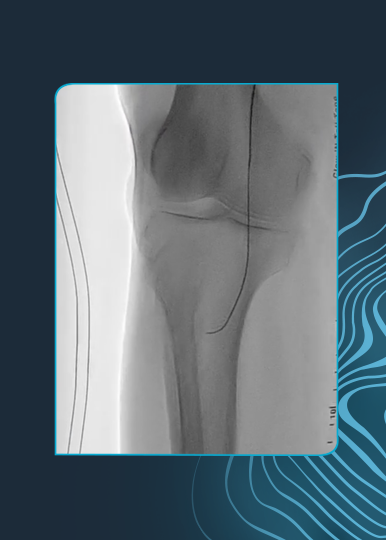
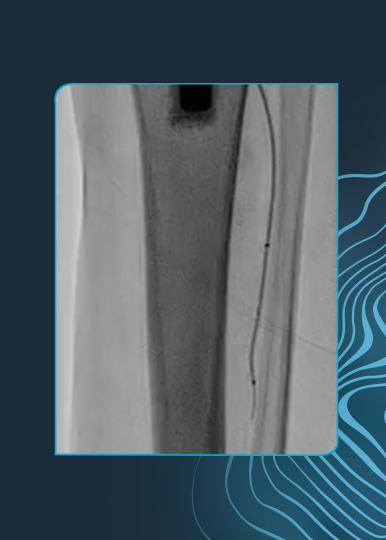
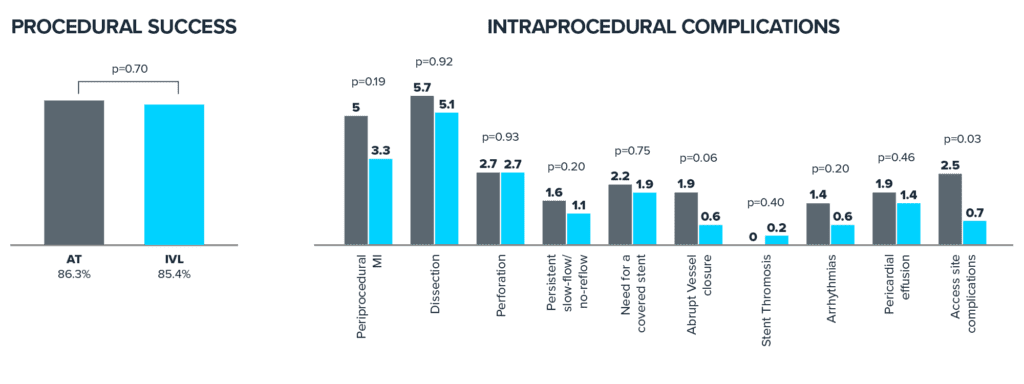
The ROLLING-STONE Registry is the largest, prospective, multi-center registry with a head-to-head comparison after propensity score matching (PSM) of Shockwave Intravascular Lithotripsy (IVL) versus rotational atherectomy (AT) in a real-world, all-comers population. The 1,005 patient registry compared the procedural success, intraprocedural complications and 30 day and 1 year MACE rates after PSM of IVL versus rotational atherectomy (RA) and orbital atherectomy (OA).

In this interview, we sat down with the lead investigator of the registry, Dr. Enrico Cerrato, San Luigi Gonzaga University Hospital and Rivoli Hospital, Italy, to discuss the outcomes of the ROLLING-STONE Registry and how he anticipates the results may impact the daily practice of interventional cardiologists.

Download the summary and watch our interview with Dr. Enrico Cerrato to learn more about the trial and to hear his perspective.


  • Trial design: Prospective, multi-center, double-arm, all-comers study of 1,005 patients with moderate-severe calcification treated with atherectomy or IVL from 23 Italian institutions
  • Safety endpoints: Freedom from MACE at 30 days and one year after PSM and inverse probability weighting (IPW) (core-lab adjudicated)
  • Primary efficacy endpoint: Procedural success: stent delivery with residual stenosis <30% and absence of in-hospital MACE (core-lab adjudicated)


IVL demonstrates a favorable 30-day MACE and statistically significant lower 1-year MACE after PSM as compared to atherectomy

IVL demonstrates similar procedural success with favorable intraprocedural complications as compared to atherectomy


Download the summary


Cerrato, E. (2025, March). Intravascular Lithotripsy And/Or Mechanical Debulking Multicenter Registry For The Treatment Of Complex Calcified Coronary Arteries: Rolling Stone Registry. Cardiovascular Research Technologies (CRT) 2025.

Dr. Leigh Ann O’Banion (Associate Clinical Professor of Surgery Vascular Surgeon UCSF Fresno, CA) shares her thoughts on peripheral Intravascular Lithotripsy (IVL) sizing for optimal patient outcomes in under two minutes.


Dr. O’Banion is a paid consultant of Shockwave Medical.

Views expressed are those of the authors and not necessarily those of Shockwave Medical.

Shockwave IVL: In the U.S.: Rx only. Prior to use, please reference the Important Safety Information for more information on indications, contraindications, warnings, precautions and adverse events.
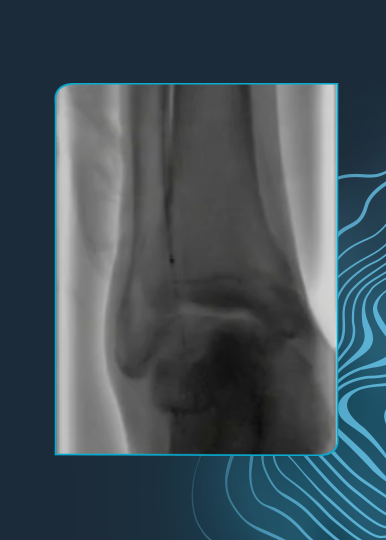
Dr. Leigh Ann O’Banion (Associate Clinical Professor of Surgery Vascular Surgeon UCSF Fresno, CA) shares her perspective on best practices to optimize peripheral Intravascular Lithotripsy (IVL) patient outcomes in under 3 minutes.


Dr. O’Banion is a paid consultant of Shockwave Medical.

Views expressed are those of the authors and not necessarily those of Shockwave Medical.

Shockwave IVL: In the U.S.: Rx only. Prior to use, please reference the Important Safety Information for more information on indications, contraindications, warnings, precautions and adverse events.

Rhian E. Davies, DO MS FACC FSCAI (Director of Complex Coronary Interventional Cardiology, WellSpan Health – York), shares her coronary Intravascular Lithotripsy (IVL) crossing techniques in under two minutes.


Dr. Davies is a paid consultant of Shockwave Medical.

Views expressed are those of the authors and not necessarily those of Shockwave Medical.

Shockwave IVL: In the U.S.: Rx only. Prior to use, please reference the Important Safety Information for more information on indications, contraindications, warnings, precautions and adverse events.
In this video series, Drs. Suzanne Baron, Kevin Croce and Nieves Gonzalo share their experiences with the Shockwave C2+ coronary Intravascular Lithotripsy (IVL) catheter in treating female patients with calcified coronary artery disease (CAD).

EMPOWER CAD is a prospective, multi-center, single-arm, female-only, all-comers study to generate real-world clinical evidence associated with coronary IVL.

Complex PCI in Women

Dr. Suzanne Baron outlines the growing need to EMPOWER, highlighting the studies that detail the discrepancies in percutaneous coronary interventions (PCI) between females and males.

Consistency Across the Sexes: IVL is Safe & Effective in Modifying Nodular Calcium in Men & Women1

Case courtesy of Dr. Kevin Croce, Brigham and Women’s Hospital

Nodular calcium poses a big clinical problem that is predominantly represented in female patients. Calcified nodules have worse long-term outcomes than any other presentation of calcium. Shockwave IVL’s unique mechanism of action has proven to have a safer, more effective outcome when modifying nodular calcium compared to other atherectomy devices.2

Dr. Kevin Croce’s patient presented with a challenging tortuous nodular calcified lesion in the right coronary artery. After being unsuccessful in passing equipment through the lesion, a 1.5 Rota burr passed through the lesion. A post-atherectomy IVUS showed that rotational atherectomy supplied minimal benefit in modifying the calcium. A Shockwave IVL catheter was used and proved on IVUS to have a significant impact on the nodular calcium. Once the right coronary artery was fixed the left circumflex artery showed signs of nodular calcium on OCT. A Shockwave C2+ IVL catheter was used to successfully treat the nodular calcium safely and effectively. IVL has shown consistent MSA and stent expansion despite the presence of nodular calcium.

Consistent Results Regardless of Complex Anatomy

Case courtesy of Dr. Nieves Gonzalo, Clinico San Carlos University Hospital in Madrid

The main challenges for calcific lesion treatment in women are related with vessel size and tortuosity.3 Dr. Nieves Gonzalo’s patient presented with both challenges in the left anterior descending artery and the circumflex artery. After visualizing how severe the calcium was in both arteries, a 2.5 Shockwave C2+ catheter was used to modify the calcium. IVL has proven to be impactful and safe for the treatment of calcific coronary disease in females.


The physicians featured are paid consultants for Shockwave Medical.

1: Hill, J, Kereiakes, D, Shlofmitz, R. et al. Intravascular Lithotripsy for Treatment of Severely Calcified Coronary Artery Disease. JACC. 2020 Dec, 76 (22) 2635-2646. https://doi.org/10.1016/j.jacc.2020.09.603.
2: Ali ZA, Shin D, Singh M, Malik S, Sakai K, Honton B, Kereiakes DJ, Hill JM, Saito S, Mario CD, Gonzalo N, Riley RF, Maehara A, Matsumura M, Hokama J, West NEJ, Stone GW, Shlofmitz RA. Outcomes of coronary intravascular lithotripsy for the treatment of calcified nodules: a pooled analysis of the Disrupt CAD studies. EuroIntervention. 2024 Dec 2;20(23):e1454-e1464. doi: 10.4244/EIJ-D-24-00282. PMID: 39618263; PMCID: PMC11586657.
3: Equity in Modifying Plaque of Women With Undertreated Calcified Coronary Artery Disease: Design and Rationale of EMPOWER CAD study McEntegart, Margaret et al. Journal of the Society for Cardiovascular Angiography & Interventions, Volume 3, Issue 11, 102289.

Shockwave IVL: In the U.S.: Rx only. Prior to use, please reference the Important Safety Information for more information on indications, contraindications, warnings, precautions and adverse events.
Dr. Robert Riley (Director, Interventional Cardiology Overlake Medical Center & Clinics, WA) shares his thoughts on incorporating Intravascular Lithotripsy (IVL) into coronary clinical practice in under three minutes.


Dr. Riley is a paid consultant of Shockwave Medical.

Views expressed are those of the authors and not necessarily those of Shockwave Medical.

Shockwave IVL: In the U.S.: Rx only. Prior to use, please reference the Important Safety Information for more information on indications, contraindications, warnings, precautions and adverse events.

Kumar Madassery, MD, FSIR (Associate Professor, Vascular Interventional Radiology Director, Peripheral Vascular Interventions & CLTI Limb Preservation Program Rush University Medical Center, Chicago IL Rush Oak Park Wound Care Center & Hospital, Oak Park IL) shares his perspective on the impact of incorporating Intravascular Lithotripsy (IVL) in peripheral artery disease (PAD) in under four minutes.


Dr. Madassery is a paid consultant of Shockwave Medical.

Views expressed are those of the authors and not necessarily those of Shockwave Medical.

Shockwave IVL: In the U.S.: Rx only. Prior to use, please reference the Important Safety Information for more information on indications, contraindications, warnings, precautions and adverse events.

In this discussion, Dr. Peter Soukas and Dr. Sameh Sayfo introduce Shockwave E8, the new peripheral IVL workhorse. They review cases and explore the benefits Shockwave E8 has to offer.

The first case features an 84-year-old patient with a non-healing wound and severely calcified below-the-knee arteries. Using E8’s longer working length and 400 pulses, they achieved significant acute lumen gain with minimal vessel trauma, demonstrating the device’s ability to navigate challenging anatomy and effectively modify calcified lesions.

The second case involves a 75-year-old patient with a sharp-angled anterior tibial artery lesion that had previously been deemed untreatable due to wire escalation failure. With Shockwave E8’s enhanced deliverability and 45 cm of hydrophilic coating, they successfully crossed the lesion and delivered therapy, restoring blood flow.


Dr. Soukas and Dr. Sayfo are paid consultants of Shockwave Medical.

Introducing Shockwave Javelin, the first-of-its-kind Forward IVL Platform for the treatment of difficult-to-cross lesions. Dr. Paul Foley and Dr. Leigh Ann O’Banion discuss what you need to know about Shockwave Javelin, cases, and best practices. Recorded March 2025.


Dr. Foley and Dr. O’Banion are paid consultants of Shockwave Medical.