At EuroPCR 2026, anchorperson Rasha Al-Lamee, spokesperson Tommaso Gori, and discussants Ranil de Silva, Oriol Rodriguez Leor, Mariusz Tomaniak, and Mike Foley took the stage to present “Evidence in Action: Advancing Care for Angina with Shockwave Reducer

Speakers: 

  • Dr. Ranil de Silva – Royal Brompton Hospital, London
  • Dr. Oriol Rodriguez Leor – Hospital Universitari Germans Trias i Pujol, Barcelona
  • Prof. Mariusz Tomaniak – Medical University of Warsaw, Warsaw
  • Dr. Mike Foley – Imperial College Healthcare NHS Trust, London


The True Prevalence and Impact of Angina

Dr. Ranil de Silva provides an overview of the definition, prevalence, challenges and impact of refractory angina on patients’ lives and healthcare systems. He describes the spectrum of angina patients and the types of therapies that may be most appropriate to meet their needs.

Current and Future Clinical Data Supporting the Use of the Shockwave Reducer in Obstructive Disease

Tune in to watch Dr. Oriol Rodriguez Leor review the clinical evidence from multiple Shockwave Reducer studies. He covers the existing evidence for obstructive disease as well as the consistency in results across procedural success, safety, and multiple measures of quality of life. He also highlights important ongoing studies and their potential future impact on the understanding and treatment of angina.

Current and Future Clinical Data Supporting the Use of the Shockwave Reducer in Non-Obstructive Disease

Join Prof. Mariusz Tomaniak as he explores the growing importance of treating angina in patients with non-obstructive disease via a case study. He then reviews the latest clinical results on Shockwave Reducer use in non-obstructive coronary arteries (ANOCA)/ischemia with no obstructive coronary arteries (INOCA) patients. He also discusses the upcoming results from ongoing trials which will provide significant clinical and mechanistic insights for this undertreated patient group.

Shockwave Reducer’s Unique Mechanism of Action and clinical impact on patients with angina

Dr. Mike Foley reviews the hypothesized MOA of the Shockwave Reducer device and the mechanistic insights drawn from the ORBITA-COSMIC clinical study. Additionally, he provides details on the clinical and real-life quality of life changes potentially made possible with Shockwave Reducer.


Individual patient stories. Results may vary.

The physicians featured are paid consultants of Shockwave Medical. Views expressed are those of the authors and not necessarily those of Shockwave Medical.

Shockwave Reducer is commercially available in select European countries and has been implanted in over 3,500 patients. It is currently under clinical investigation in the U.S.

CAUTION: In the United States, Shockwave Reducer is an investigational device, limited by United States law to investigational use. Shockwave Reducer is subject of investigational testing and is being studied in the COSIRA-II trial in Canada. Shockwave Reducer is commercially available in certain countries outside the U.S. and Canada. Please contact your local representative for specific country availability. Prior to use, please reference the Instructions for Use for more information on warnings, precautions and adverse events: ifu.sw-reducer.com
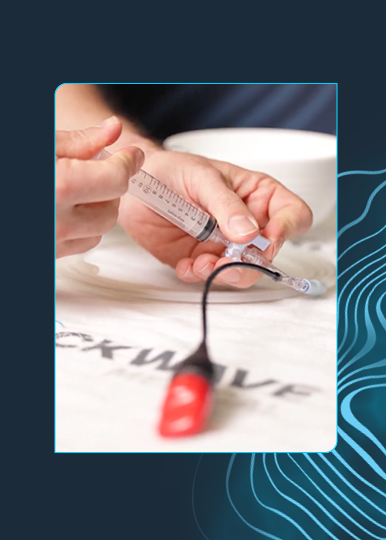
Proper balloon preparation is a critical step in helping optimize procedures performed using balloon-based Shockwave Intravascular Lithotripsy (IVL) catheters.

In this step-by-step demonstration, learn how to prepare Shockwave IVL balloons for both peripheral and coronary applications using a saline and contrast mixture, three-way stopcock, syringe, and indeflator. The video highlights key preparation techniques designed to help minimize air bubbles before the procedure begins.

Watch to review the instruments required, best practices for creating and maintaining negative pressure, and important tips for ensuring the balloon is properly prepared and ready for use.

Because while calcium can be challenging to treat, preparing your Shockwave IVL balloon doesn’t have to be.


Filmed in a demonstration environment. Please ensure adherence to sterile practices. Refer to the Instructions for Use or contact your local representative for further guidance.

Shockwave IVL: In the U.S.: Rx only. Prior to use, please reference the Important Safety Information for more information on indications, contraindications, warnings, precautions and adverse events.

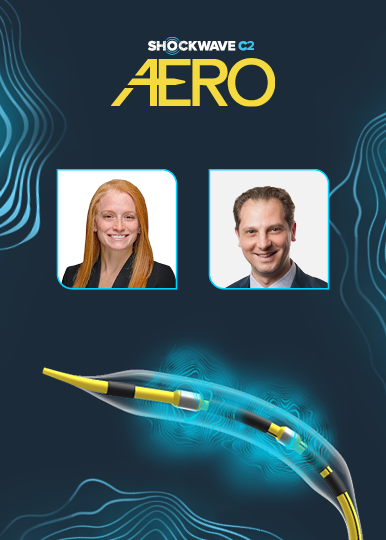
Join Drs. Lindsey Cilia and Allen Jeremias as they crack into Shockwave C2 Aero’s aero-volutionary deliverability and crossability during an on-site interview at CRT 2026. Watch as they discuss the benefits of this new device compared to prior generations of Coronary IVL, dive into the ways it’s impacted their calcium algorithms, and walk through a calcified tortuous RCA live case performed by Dr Jeremias and his team.

How Has Shockwave Coronary IVL Changed Your Practice? (0:10 -1:15)

Drs. Cilia and Jeremias talk about how safe, effective Coronary IVL has significantly changed the way physicians tackle complex PCI — helping them improve their outcomes especially in complex, tortuous lesions.

Tell Us About Your Experience with Shockwave C2 Aero (1:15-2:15)

Drs. Cilia and Jeremias discuss Shockwave C2 Aero’s device’s improved deliverability, including how it requires less reliance on adjunctive tools compared to Shockwave C2+.

“A lot of times it’s my first go-to device for calcium modification even if the lesion is super tortuous and the imaging catheter won’t cross.”

—Dr. Lindsey Cilia

“It’s an amazing improvement from the first generation — it’s like going from iPhone 1 to iPhone 15.”

— Dr. Allen Jeremias

How Has Shockwave C2 Aero Impacted Your Treatment Algorithm? (2:20-3:15)

From use as an upfront calcium modification tool to helping enable a radial approach in more complex patients, Drs Cilia and Jeremias cover all the advancements Shockwave C2 Aero has brought to their practices.

“My go-to is really to take this device up front as opposed to some of the more high-risk devices.”

—Dr. Lindsey Cilia

“Many times it avoids using atherectomy … and it shortens the procedure and just simplifies it.”

— Dr. Allen Jeremias

Case Review: PCI of Calcified Tortuous RCA (3:15-end)

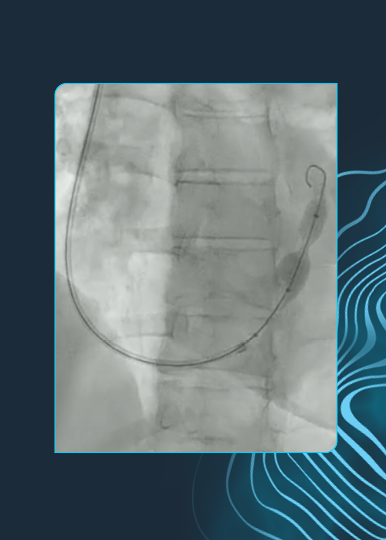
Dr. Jeremias walks Dr. Cilia through a recent Shockwave C2 Aero case involving a 74-year-old male patient with multiple comorbidities and a heavy coronary calcium burden involving three different morphologies.

Watch to hear their entire conversation about this complex case, including the importance of imaging, reducing patient time on the table, and how Shockwave C2 Aero’s deliverability, crossability and re-wrapability performed in a real-world scenario.

Explore Shockwave C2 Aero


Dr. Jeremias and Dr. Cilia are paid consultants of Shockwave Medical.

Shockwave IVL: In the U.S.: Rx only. Prior to use, please reference the Important Safety Information for more information on indications, contraindications, warnings, precautions and adverse events.

At SIR 2026, Dr. Narayanan Thulasidasan, Consultant Interventional Radiologist at Guy’s and St Thomas’ NHS Foundation Trust in London, UK, shares four challenging distal tibial and below-the-ankle (BTA) revascularization cases. These case reviews highlight treatment strategies for heavily calcified disease, procedural decision-making, and the use of Shockwave Javelin Peripheral Intravascular Lithotripsy (IVL) to facilitate successful limb salvage interventions.

Case 1: Distal Tibial & Below-the-Ankle Revascularization Using Shockwave Javelin Peripheral IVL

Dr. Narayanan Thulasidasan presents the treatment of a complex below-the-ankle (BTA) chronic limb-threatening ischemia (CLTI) case in an 86-year-old patient with toe necrosis. Faced with heavily calcified distal pedal disease and limited treatment options, the team used Shockwave Javelin Peripheral IVL to facilitate lesion crossing and vessel preparation, followed by IVL and angioplasty. The case highlights decision-making in challenging distal tibial and pedal interventions and demonstrates successful restoration of blood flow to support wound healing.

Case 2: Complex Pedal Arch Revascularization in a High-Risk CLTI Patient

In this video, Dr. Thulasidasan discusses a challenging below-the-ankle intervention in a patient with diabetes, end-stage renal disease, and tissue loss in a remaining limb. With severe calcification limiting device delivery, Shockwave Javelin Peripheral IVL was used to facilitate crossing and treatment of the dorsalis pedis, pedal arch, and posterior tibial artery. The case highlights procedural strategies for navigating complex pedal anatomy, optimizing lesion preparation, and restoring inline flow to support wound healing and limb preservation.

Case 3: Treating Severe Below-the-Ankle Calcification with Shockwave Javelin Peripheral IVL

Dr. Thulasidasan presents a case involving an 86-year-old patient with a non-healing hallux ulcer caused by a nail bed injury. Faced with extensive calcification and difficult catheter delivery below the ankle, the team used Shockwave Javelin Peripheral IVL to modify calcium in the posterior tibial artery and plantar circulation after conventional crossing techniques proved insufficient. The case highlights procedural decision-making, lesion preparation strategies, and the role of Shockwave Javelin Peripheral IVL in facilitating treatment of heavily calcified distal tibial and pedal vessels to improve perfusion and support wound healing.

Case 4: Urgent Limb Salvage Following Partial Foot Amputation

Dr. Thulasidasan presents a complex Rutherford 5 chronic limb-threatening ischemia (CLTI) case in a patient who required emergency partial foot amputation due to infection and sepsis. With severe below-the-ankle calcification limiting conventional treatment options, Shockwave Javelin Peripheral IVL was used to modify calcium in the posterior tibial and plantar arteries, enabling successful balloon delivery and revascularization. The case highlights the role of Shockwave Javelin Peripheral IVL in overcoming heavily calcified distal disease, restoring blood flow after urgent surgical intervention, and supporting ongoing wound healing.


Dr. Thulasidasan is a paid consultant of Shockwave Medical.

Shockwave IVL: In the U.S.: Rx only. Prior to use, please reference the Important Safety Information for more information on indications, contraindications, warnings, precautions and adverse events.

In this case, Dr. Jeff Tyler, MD (Orange County Heart Institute, Director of Cardiogenic Shock at Providence St. Joseph Hospital), takes on a severely stenosed lesion that initially resisted intravascular ultrasound (IVUS) crossing. Shockwave C2 Aero demonstrates its enhanced deliverability and crossability, successfully navigating the lesion where traditional imaging tools could not.

By overcoming these procedural barriers, Shockwave C2 Aero helps simplify an otherwise extremely difficult intervention and enables treatment in a case that would typically present significant limitations.

Watch the case review to learn more.


Dr. Tyler is a paid consultant of Shockwave Medical.

Shockwave IVL: In the U.S.: Rx only. Prior to use, please reference the Important Safety Information for more information on indications, contraindications, warnings, precautions and adverse events.

Curious how Shockwave C2 Aero performs in tough, calcified lesions? In this case review, Dr. Yousif Ahmad and Dr. Brett Wanamaker take you step‑by‑step through an initial Rotashock procedure, demonstrating how Shockwave C2 Aero’s enhanced deliverability and crossability help safely increase vessel compliance before stenting.

Patient Overview: Complex Calcified Left Main Bifurcation

An 85-year-old female patient presented with worsening angina and dyspnea. Angiography showed severely calcified distal left main bifurcation disease, impacting both the left anterior descending artery (LAD) and diagonal branches.

Deploying Shockwave C2 Aero Post-Atherectomy to Increase Compliance Before Stenting

Dr. Ahmad used atherectomy in the LAD and circumflex, resulting in a slow flow complication in the LAD that was resolved with bailout stenting. He followed with a 4.0 mm Shockwave C2 Aero catheter to achieve complete calcium modification. Dr. Ahmad first delivered 60 pulses in the left circumflex artery (LCX), then advanced the catheter easily into the proximal LAD lesion to deliver the remaining 60 pulses. Finally, he placed a stent in the left main bifurcation.

Post-Case Reflection: Next-Gen Capabilities Could Enable Shockwave IVL-First Strategy

Dr. Ahmad and Dr. Wanamaker discuss how Shockwave C2 Aero’s upgrades — increased deliverability, crossability and re-wrap ability — in conjunction with Shockwave’s proven safety and efficacy have the potential to shift workflows to a Shockwave IVL-first approach.


Watch the full case review to learn more about Shockwave C2 Aero’s capabilities in complex coronary interventions.


Dr. Ahmad and Dr. Wanamaker are paid consultants of Shockwave Medical.

Shockwave IVL: In the U.S.: Rx only. Prior to use, please reference the Important Safety Information for more information on indications, contraindications, warnings, precautions and adverse events.

Dr. Brett Wanamaker, MD, FACC, FSCAI, Associate Professor of Internal Medicine at the University of Michigan, presents a Shockwave C2 Aero case demonstrating improved deliverability and crossability in complex calcified coronary lesions.

Treating Complex Calcified LAD and RCA CTO Lesions

This case highlights treatment of a severely calcified left anterior descending artery (LAD) and a right coronary artery (RCA) chronic total occlusion (CTO). The Shockwave C2 Aero successfully crossed a tortuous proximal LAD and the RCA CTO with minimal guidewire or catheter support, demonstrating strong lesion crossing capability in challenging anatomy.

Overcoming Failed Stent Delivery

Although noncompliant balloons were able to cross both lesions, initial stent delivery attempts were unsuccessful—highlighting the limitations of conventional approaches in heavily calcified lesions.

Enabling Stent Delivery with Calcium Modification

Following calcium modification with Shockwave C2 Aero, stent delivery was achieved. Final imaging confirmed strong stent expansion with a high minimal stent area (MSA), supporting a favorable procedural outcome and positive patient prognosis.


Watch the full case review to see how Shockwave C2 Aero improves crossability, enables stent delivery, and optimizes outcomes in complex calcified coronary lesions.


Dr. Wanamaker is a paid consultant of Shockwave Medical.

Shockwave IVL: In the U.S.: Rx only. Prior to use, please reference the Important Safety Information for more information on indications, contraindications, warnings, precautions and adverse events.

At DGK 2025, leading experts in the cardiology field (Joachim Schofer, Dominik Buckert, Felix Woitek, Peter Ong, Tommaso Gori, Kristin Marx and Dagmar Sotemann) took the stage to present “BEHANDLUNG DER REFRAKTAREN ANGINA PECTORIS: Dringend Benotigte Linderung fur Patienten mit RA.”

In this symposium, the physicians discussed:

  • The Shockwave Reducer mechanism of action (MOA)
  • Treatment of patients with obstructive coronary artery disease (CAD)
  • Treatment of patients with non-obstructive CAD (Coronary Artery Disease)
  • Implementation of the Coronary Sinus Reducer in clinical practice
  • Clinical data

Individual patient stories. Results may vary.

Prof. Dr. med. Joachim Schofer, Prof. Dr. med. Dominik Buckert, Dr. med. Felix J. Woitek, Prof. med. Peter Ong, Prof. Dr. med. Tommaso Gori, Dr. med. Kristin Marx and Dr. med. Dagmar Sötemann are paid consultants of Shockwave Medical. Views expressed are those of the authors and not necessarily those of Shockwave Medical.

The newly released, transatlantic V-PAD Consensus represents a significant milestone for the global vascular community, bringing together 103 experts across vascular surgery, interventional radiology, angiology, and cardiology to establish a unified understanding of vessel preparation (VP) in peripheral artery disease (PAD). Using a modified Delphi process, the group delivered the first standardized definition of vessel preparation and outlined its core aims and practical considerations, providing a framework that can help harmonize clinical practice, support research design, and guide future policy in PAD care worldwide.

The most compelling outcome of the publication is the strong endorsement of Shockwave IVL for calcified PAD lesions. Experts reached high-level agreement (>75%) that IVL should serve as the first-line vessel preparation modality for calcified above-the-knee lesions. Regardless of the calcium morphology – eccentric or concentric – the support for IVL remained strong, confirming once again the consistency and predictability of Shockwave IVL’s results. These findings reinforce the role of Shockwave IVL as a key tool for calcified vessel preparation, setting a clear expectation for its central role in modern endovascular treatment strategies.

Read the full publication to learn more, and don’t miss the video below where lead author Prof. Thanos Saratzis breaks down the real-world impact of the V-PAD Consensus.

Read The Publication


Prof. Thanos Saratzis is a paid consultant of Shockwave Medical. 

Saratzis A, Patrone L, Secemsky EA, et al. Use of Vessel Preparation in Endovascular Peripheral Arterial Disease (PAD) Interventions: A Global Qualitative Analysis. Journal of Endovascular Therapy. 2026;0(0). doi:10.1177/15266028261424732

This work was partly funded by Shockwave Medical Ltd., Boston Scientific Ltd., Medtronic Ltd., Philips Ltd.; funders did not have any input in collecting, maintaining, or analyzing data.

Shockwave IVL: In the U.S.: Rx only. Prior to use, please reference the Important Safety Information for more information on indications, contraindications, warnings, precautions and adverse events. Please contact your local Shockwave representative for specific country availability.

Join Dr. Ziad Ali, Dr. Jai Khatri, Dr. Aloke Finn and Professor James Spratt as they discuss coronary artery calcification and the importance of understanding calcium morphologies in guiding treatment during percutaneous coronary intervention (PCI).

During the webinar, the Faculty review data from a recent cadaver-based comparative study that evaluated Intravascular Lithotripsy (IVL) alongside cutting balloons and ultra–high-pressure balloons using micro-CT, OCT, and histology. The study included calcium modification data from key calcium types—concentric, eccentric, and nodular calcium —and they explain why accurate assessment of calcium morphology is essential for selecting safe and effective treatment options. Findings from the study demonstrated that IVL consistently produces calcium fractures in most lesions, while minimizing vessel wall injury, whereas high-pressure balloons frequently damaged the vessel wall with less consistent fracture. An important consideration given the association between medial injury and adverse long-term outcomes.

Additionally, the Faculty also discuss Shockwave IVL’s mechanism of action, highlighting how ultrasonic pressure waves selectively fracture calcium based on acoustic impedance while preserving soft tissue. Clinical case examples illustrate the role of IVL in complex and high-risk lesions where procedural safety is critical, reinforcing IVL’s value as a low-risk and effective approach to calcium modification across a range of coronary anatomies.


Drs. Ali, Khatri, and Finn, and Professor Spratt are paid consultants of Shockwave Medical. Views expressed are those of the presenters and not necessarily those of Shockwave IVL.

Shockwave IVL: In the U.S.: Rx only. Prior to use, please reference the Important Safety Information for more information on indications, contraindications, warnings, precautions and adverse events. Please contact your local Shockwave representative for specific country availability.